From Post-1857 India to the Deobandi Scholarly Tradition
The upheavals of 1857 created an immediate institutional crisis for North Indian Muslim scholarship. Traditional structures of learning faced collapse. Scholars recognized an urgent need to preserve teaching, devotional discipline, legal reasoning, and community leadership in a changing environment.
Darul Uloom Deoband emerged in the late 1860s as a response to this crisis. The resulting Deobandi tradition developed around the Qur’an, Hadith, Hanafi jurisprudence, moral reform, and institutional service rather than around biography alone. It built a durable framework for transmitting knowledge across generations.
This list brings together scholars whose lives demonstrate different forms of influence. The examples include teaching Hadith, writing, public oratory, reform, institutional administration, and anti-colonial engagement.
Important: This guide serves as an introductory map of selected Deobandi-linked scholars, not a complete ranking of authority across the entire tradition.
Criteria for Selection: Why These Scholars Belong Together
We select figures by function rather than fame alone. Each scholar appears here because the available source material connects him to a definable scholarly contribution, a public role, an institutional office, or a widely discussed text.
The profiles prioritize named facts. They include specific references to Darul Uloom Deoband teaching roles, Sheikh-ul-Hadith appointments, published works, Hadith methodology, Jamiat Ulama-e-Hind involvement, and reform movements. These anchors provide a reliable way to understand a scholar's actual impact.
The list spans related generations and intellectual influences. Shah Ismail Shahid died in 1831, decades before the founding of Darul Uloom Deoband. He is included because later Deobandi reform discourse frequently engages his foundational work on Tauheed, Shirk, and Bid’ah.
The Biographical List: Reformers, Freedom Fighters, and Hadith Authorities
1. Shah Ismail Shahid: Reformer of Tauheed and Author of Taqwiyat-ul-Iman
Shah Ismail Shahid lived from 1779 to 1831. He was the grandson of Shah Waliullah through Shah Abdul Ghani. Around 1826, he authored Taqwiyat-ul-Iman, a text that focused intensely on monotheism, Shirk, and Bid’ah.
He operates as an intellectual precursor discussed in Deobandi reform circles, not as a Darul Uloom Deoband graduate. His writings set a theological baseline that later scholars would reference, debate, and expand upon.
2. Maulana Mohammad Ismail Sambhali: Scholar, Orator, and Freedom Fighter
Born in Sambhal around 1899, Maulana Mohammad Ismail Sambhali was the son of Munshi Kifayatullah. He delivered his first major political speech in 1919, shortly after the Jallianwala Bagh massacre.
He earned the title Raisul Muqarririn, or Raeesul Muqarrareen, for his powerful public oratory. His public life intersected heavily with the Khilafat and Civil Disobedience contexts. Alongside his political engagement, he authored Akhbarut Tanzil, a detailed book regarding Qur’anic prophecies.
3. Dr. Muhammad Mustafa Azmi: Hadith Scholarship in the Modern Academy
Dr. Muhammad Mustafa Azmi was born in Mau in 1930 and graduated from Darul Uloom Deoband in 1952. He later studied at Cambridge under the supervision of A.J. Arberry. His landmark work, Studies in Early Hadith Literature, offered a rigorous critique of Joseph Schacht.
He maintained a long affiliation with King Saud University, pioneered the computerization of Hadith texts, and received the prestigious King Faisal Award. His authority remains especially significant within modern academic Hadith studies and debates with Orientalist scholarship, rather than traditional madrasa administration.
Teachers of Hadith and Institutional Custodians at Deoband
4. Maulana Abdul Haq Azmi: Sheikh-ul-Hadith and Teacher of Generations
Maulana Abdul Haq Azmi was born in 1928 and entered Darul Uloom Deoband in 1948. He studied under prominent figures, including Maulana Syed Hussain Ahmad Madani.
He served as Sheikh-ul-Hadith, teaching Sahih Bukhari and Mishkat-ul-Masabih. His teaching anchored the Daur-e-Hadith, the intensive final year of the Alim course where major Hadith collections are studied. He passed away on December 30, 2016, leaving behind thousands of certified students.
5. Maulana Zakariyya Kandhlawi: Hadith Scholar and Author of Fazail-e-Aamal
Maulana Zakariyya Kandhlawi dedicated his life to Hadith teaching. His scholarship encompassed the Sihah Sitta, Asma-ur-Rijal, and Matn analysis. He carefully navigated the discussion of Da'if Hadith in virtues-of-deeds literature.
His compilation, Fazail-e-Aamal, became a primary devotional teaching text within Tablighi Jamaat circles. The work focused on methodology and spiritual encouragement rather than theological controversy.
6. Maulana Marghoob-ur-Rahman: Rector of Darul Uloom Deoband
Maulana Marghoob-ur-Rahman completed his studies in 1932. He trained in Ifta under Maulana Mufti Sahool and shared a family link to Maulana Mashee’atullah. He was elected to the Majlis-e-Shura in 1962 and appointed Vice-Rector in 1981.
He served as Rector of Darul Uloom Deoband from 1982 to 2010. Historical records compiled by author Mohammad Najeeb Qasmi indicate that his administrative service was deeply tied to his remembered moral profile of Tawakkul Alallah.
Scholars in Movements: Jamiat Ulama-e-Hind and Tablighi Jamaat
7. Shaikhul Hind Maulana Mahmud Hasan Deobandi and Jamiat Ulama-e-Hind
Shaikhul Hind Maulana Mahmud Hasan Deobandi is closely associated with the Silk Letter Movement. His anti-colonial scholarship inspired the proposal behind Jamiat Ulama-e-Hind.
The organization was officially established on November 19, 1919, with Mufti Kifayatullah serving as its first president. After 1947, the organization shifted its primary focus from parliamentary politics toward education, welfare, and social reform.
8. Maulana Muhammad Ilyas Kandhlawi and the Tablighi Jamaat Context
Maulana Muhammad Ilyas Kandhlawi founded the Tablighi Jamaat in the 1920s, emerging from the specific reform setting of Mewat. Maulana Muhammad Zakariya supported the movement as a Hadith scholar, and Maulana Muhammad Yusuf later served as its second leader.
These movements often navigate complex public environments. Contemporary issues like the Uniform Civil Code, the Muslim Personal Law Board, minority status, Vande Mataram, and Suriya Namashkar represent the broader landscape of public-religious engagement in which these organizations operate.
Terms Readers Should Understand Before Reading These Biographies
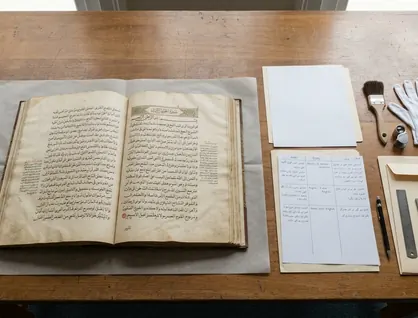
Understanding scholarly titles prevents readers from flattening distinct roles into a single category of authority.
- Sheikh-ul-Hadith: The senior-most professor of Prophetic traditions in a madrasa, usually associated with teaching Sahih Bukhari or guiding the highest Hadith class.
- Takhreej: The process of verifying Hadith sources, tracing chains of transmission, and determining authenticity. This method connects directly to Dr. Mustafa Azmi’s scholarly contributions.
- Mustashreqeen: Western Orientalist scholars. This term is specifically relevant to Azmi’s academic critique of Joseph Schacht.
- Maulana: A respectful scholarly title derived from the Arabic word Maula with the suffix Na. Imam Nawawi discussed multiple meanings of the term, and scholars like Abdullah ibn Baz permitted its usage.
Field Note: When comparing scholars, look first at their teachers, texts, institutional offices, and public contexts before judging their overall influence.
How to Read This Tradition Without Flattening It
Do not treat all Deobandi scholars as the exact same type of authority. A rector managing an institution, a Hadith critic verifying texts, a reform writer addressing the public, and a movement organizer mobilizing communities serve entirely different scholarly functions.
Adopt a clear reading order for biographical texts. Begin with the scholar's life dates and geography. Next, identify their teachers and chains of learning. Then, locate their principal text or institutional office. Finally, examine their public context and the technical terms associated with their work.
A student sits in a Deoband Hadith class and opens a worn copy of Sahih Bukhari. He listens as the teacher recites the chain of transmission, tracing the names back through centuries of scholarship. He pauses to check a precise Takhreej reference written in the margin of his notebook. In that quiet moment of verification, the biography of a scholar ceases to be a mere historical entry and becomes a living map of learning.