Abstract
The burial concludes. Before family members disperse from the gravesite or the home, one relative sits quietly, recites a short portion of the Qur’an, and asks whether Allah might grant its reward to the Mayyit. This quiet moment raises the central question: whether spiritual reward from recitation, charity, sacrifice, and supplication may be transferred to the deceased.
Isal-e-Sawab is the act of sending Thawab or Sawab to the deceased—a practice distinct from independent salvation or intercession outside divine permission. Sunni juristic reasoning, particularly foregrounding the Hanafi-Deobandi presentation, addresses this directly. Imam Abu Hanifah, Imam Ahmad bin Hanbal, and Imam Shafi'i all provide foundations for discussing how the living can benefit those who have passed.
Methodology: Textual, Juristic, and Doctrinal Review
We organize this review as a research-paper summary rather than a polemical fatwa. The issue combines transmitted texts, legal inference, and devotional practice. We apply three specific lenses. Nas refers to clear textual evidence from the Qur’an and Hadith. Nas Fahmi covers the interpretation of those texts. Istimbat involves juristic legal deduction.
Primary evidence categories include Qur’anic verses used in argument, Hadith reports on charity and supplication for the dead, and juristic works from the four Sunni schools. While evaluating these juristic positions, we apply a source-mapping approach to isolate primary texts from later cultural accretions. The textual review begins with acts that have broad textual support, such as Du'a, Sadaqah, and Udhiya. We then examine debated reward-transfer applications, placing disagreements over transferring the reward of Qur’an recitation under Ikhtilaf rather than sectarian accusation.
Core Terms: Sawab, Thawab, Isal-e-Sawab, and Mayyit
The same Urdu-Arabic devotional phrase, Isal-e-Sawab, can be misunderstood as a mechanical transfer. Clear definitions prevent this error. Sawab and Thawab serve as equivalent English transliterations for the spiritual reward granted by Allah for righteous deeds. Isal-e-Sawab is the specific intention that Allah convey the reward of a permissible good deed to a deceased person. The Mayyit is the deceased. This subject belongs to belief, worship, and jurisprudence together.
Bottom Line: The legal question is not whether Allah can reward the deceased, but which actions the Shariah recognizes as valid means of seeking that mercy.
Doctrinal Background: Barzakh, Resurrection, and the Continuing Concern for the Dead
Muslims continue to pray for the dead because of foundational beliefs regarding accountability and Allah's mercy. Alam-e-Barzakh operates as the intermediate state between death and resurrection. We avoid speculative descriptions of the unseen, treating Barzakh without mapping detailed conditions beyond transmitted sources.
The practice of benefiting the deceased connects directly to the broader Sunni belief in accountability after death and Yaum-ul-Qiyamah. The Qur'anic mention of Pharaoh illustrates post-death accountability in Sunni discussion. We keep the focus on the doctrinal principle of divine justice rather than building an extended historical narrative.
Key Findings: Areas of Agreement and Juristic Disagreement
Arranging the findings from least disputed to more disputed acts ensures readers do not treat every practice as having the same evidentiary status. First, Du'a and Sadaqah for the deceased are broadly recognized as acts of guaranteed spiritual benefit in Sunni practice. Sahih Muslim 1631 anchors the discussion of ongoing charity, beneficial knowledge, and righteous children making Du'a.
Second, the transfer of reward for Qur’an recitation holds strong standing in Hanafi and Hanbali legal thought. Imam Abu Hanifah aligns with the Hanafi acceptance of gifting reward, while Imam Ahmad bin Hanbal provides Hanbali support.
Third, Imam Shafi'i is often cited as more cautious regarding direct transfer. Treating Imam Shafi'i's cautious position as a blanket denial that any benefit can reach the dead ignores the role of Du'a after recitation in later Sunni discussion. Later Shafi'i authorities and students discussed benefit reaching the deceased through supplication accompanying the recitation.
Reading the Qur’an for the Deceased: Legal Reasoning and Practice
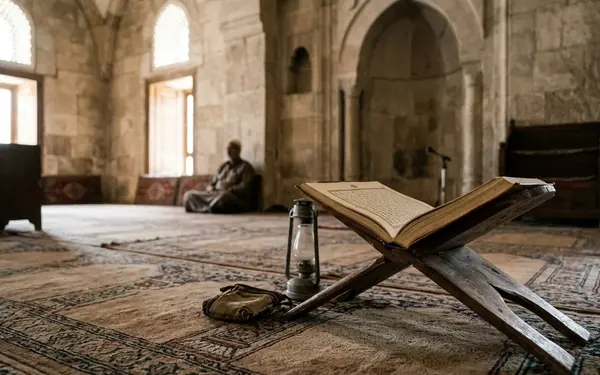
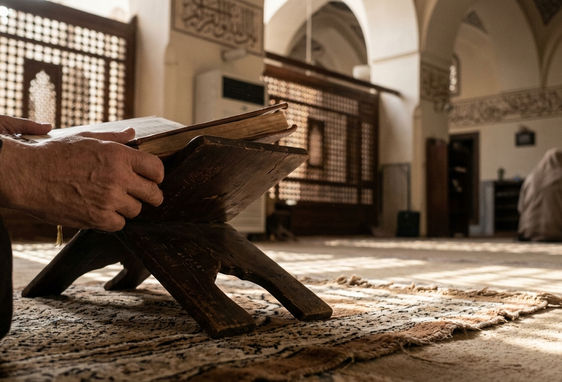
Families frequently ask about reading the Qur’an for the deceased and transmitting the Thawab of that recitation. The legal explanation avoids making a paid recitation gathering a requirement. Radd al-Muhtar establishes that a Muslim may recite the Qur’an and ask Allah to convey the reward to the deceased. This Hanafi legal manual details the position associated with Imam Abu Hanifah.
Hanbali discussions, commonly traced through Imam Ahmad's school and later works such as Ibn Qudamah's al-Mughni, support acts whose reward may reach the dead without overstating uniformity across every later jurist.
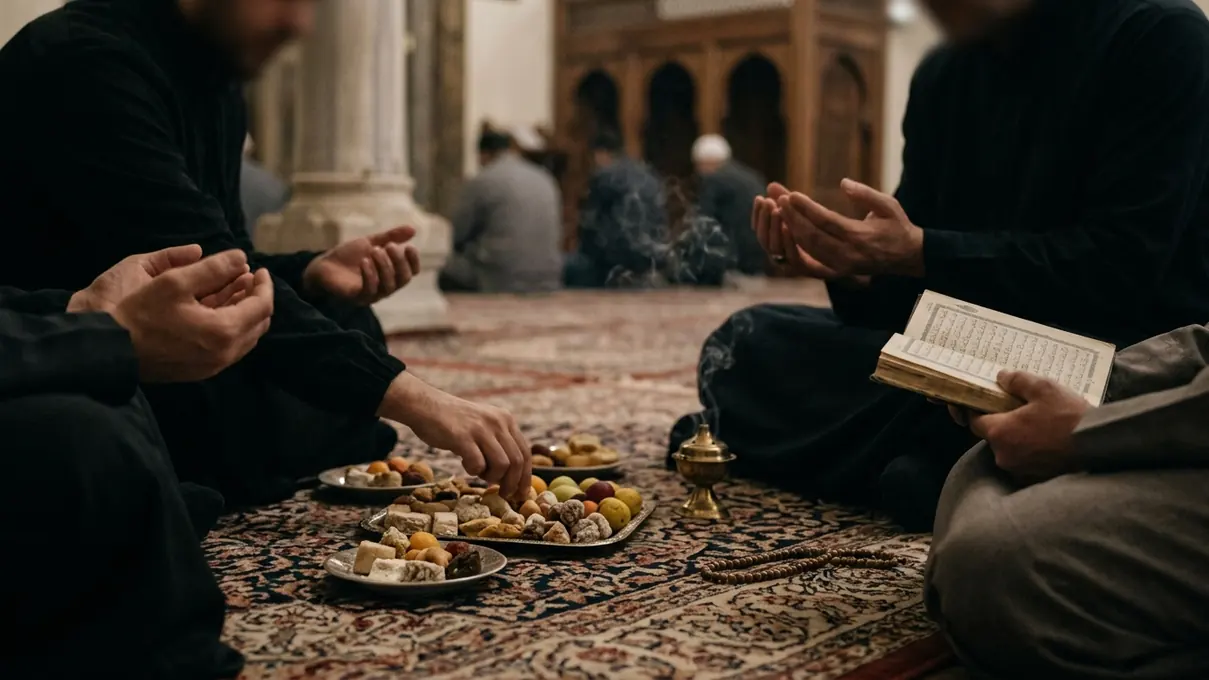
Field Note: The practical sequence is straightforward. Recite what is manageable. Pause for Du'a. Explicitly ask Allah to accept the recitation. Mention the deceased by relationship or name without treating the wording as a fixed formula.
Ziyarat and Supplication at Graves: Reverence Without Excess
Ziyarat involves visiting graves for the remembrance of death, supplication, and sober reflection. Sahih Muslim 976 reports the Prophet's visit to the grave of Hazrat Amina, his mother, within the broader discussion of weeping, remembrance, and limits at graves. The report stating "I had forbidden you from visiting graves; now visit them" demonstrates the move from prohibition in an earlier setting to permission for remembrance.
Imam Tirmidhi categorized and transmitted legal discussions relevant to grave visitation, including the debated question of women visiting graves. Adab sets a firm boundary here. Du'a is directed to Allah at the grave. Presenting all grave visitation as Bid'at erases Prophetic reports on visiting graves for remembrance, while presenting graves as places of independent rescue risks Shirk. The deceased is not treated as an independent source of rescue, forgiveness, provision, or unseen control.
Udhiya and Sacrifice on Behalf of the Deceased
Udhiya serves as a concrete example of reward transfer because it is a recognized act of worship with a known time window and visible family decision-making. Udhiya is the ritual animal sacrifice performed during the days of Eid al-Adha after the Eid prayer in places where the prayer is held, continuing through the recognized sacrifice days according to the juristic school followed.
We distinguish Waajib and Sunnat-e-Muakkadah discussions according to the legal school followed, without turning the text into a full comparative fiqh manual. Performing sacrifice on behalf of the deceased falls under the broader principle of conveying reward from a valid act of worship. Imam Abu Hanifah, born around 80 AH, helped situate early Hanafi legal formation on such matters. Ali (RA) is often cited in discussions of sacrificing on behalf of the Prophet. Sunan Abi Dawud records the practice of offering Udhiya for those who have passed.
Limitations and Jurisprudential Boundaries
We place these limitations before the applied framework so you can close with usable guidance. Readers must not flatten recognized Ikhtilaf. Imam Malik, Imam Abu Hanifah, Imam Shafi'i, and Imam Ahmad stand as recognized Mujtahids whose schools developed distinct legal reasoning across the second and third Islamic centuries.
A Hanafi family reciting Qur'an and making Du'a after burial is not legally identical to a family using estate money for a vowed sacrifice. The second scenario involves inheritance and vow rules. Jahiliyyah-era vows or sacrifices only apply when a family practice carries pre-Islamic associations; they are not a general label for ordinary Sadaqah, Du'a, recitation, or Udhiya.
Important: Estate-funded sacrifices, inherited vows, disputed endowments, unpaid debts, and family conflicts over funeral expenses need a case-specific fatwa from a qualified scholar.
Worked Application: A Household Sequence
Returning to the household moment after burial, we can translate this research into a usable sequence a family can follow without turning it into a compulsory ceremony. Obligations precede voluntary acts. First, settle urgent funeral responsibilities. Identify any debts or rights owed by the deceased. Give lawful charity if able. Recite the Qur'an or make Du'a. Finally, ask Allah to convey the reward to the deceased.
You might use this wording: "O Allah, accept this deed and grant its reward to my deceased parent, relative, teacher, or the believers."
Practice Isal-e-Sawab sincerely and modestly, without fixed-price ritualism, public display, or accusations against Muslims who follow another qualified juristic view. Carry out the foundational obligations first, give lawful charity, and make earnest supplication for the deceased.