The Islamic Year Is Best Understood as a Worship Plan
The Islamic calendar is not mainly a list of festivals. It is a disciplined annual plan for worship, restraint, sacrifice, repentance, and family responsibility. Many English-reading Muslims look for a simple vocabulary list of the 12 Hijri months. What often helps more is a practical sense of what each major period requires.
The worship arc moves in order. It begins with Muharram and Ashura, transitions through Rajab, Sha'ban, and Shabe Baraat, peaks in Ramadan, and continues into Shawwal, Dhul-Hijjah, Qurbani, and Eid-related rulings. This guide follows the ongoing Hanafi-Deobandi educational framing associated with Mohammad Najeeb Qasmi’s writings, noting where juristic views differ to set a clear baseline for household practice.
How the Hijri Months Shape Religious Duties
The Hijri calendar operates as a lunar religious framework where worship planning depends entirely on confirmed dates. Date-sensitive months directly dictate household practice. Ramadan requires obligatory fasting. Shawwal brings Eid al-Fitr and six voluntary fasts. Dhul-Hijjah demands preparation for Arafah, Eid al-Adha, Takbir-e-Tashreeq, and Qurbani. Muharram introduces Ashura.
Important: Date-sensitive practices should be acted upon through reliable local moon-sighting or trusted masjid announcements, because communities may begin Ramadan, Eid, and Dhul-Hijjah on different confirmed dates.
The Ashhur Hurum—the four sacred months of Dhul-Qa'dah, Dhul-Hijjah, Muharram, and Rajab, provide a moral framework for restraint, repentance, and increased obedience rather than casual cultural observance. Understanding specific legal categories clarifies these duties. Wajib denotes an obligatory ruling in the Hanafi usage relevant to Qurbani. Sunnah Muakkadah represents an emphasized practice of Prophet Muhammad (PBUH). Nafl is voluntary worship. Makrooh means disliked. Qadha involves making up a missed duty. Kaffara serves as an expiatory consequence. Sadaqah is charity.
Ramadan: How to Fast With Purpose and Correct Practice
Ramadan fasting became obligatory around 2 Hijri. It functions as both a strict legal duty and a training in Taqwa. The daily method requires precision and focus.
Form the intention before the fast begins. Complete Sehri before true dawn enters. Avoid all invalidators during daylight hours while strictly guarding the tongue, eyes, and conduct. Begin Iftaar immediately after sunset.
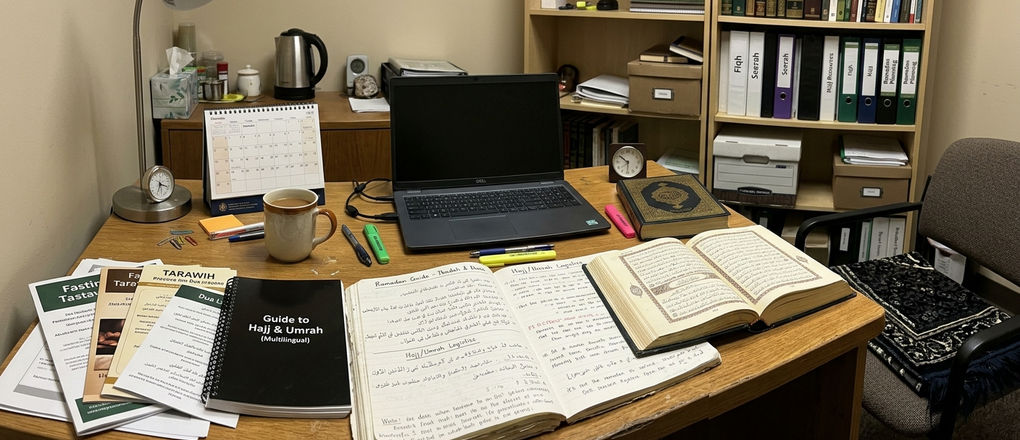
A common misstep involves confusing the priority of missed fasts. Qadha fasts for validly missed Ramadan days remain a strict obligation. They must be distinguished from later Nafl fasts such as those in Shawwal or Muharram. The worship rhythm around the fast sustains the believer throughout the month. Namaz-e-Tarawih follows Isha during Ramadan nights. Qur'an recitation anchors the daily routine. Believers increase du'a near Iftaar and in the deep night. Itikaf takes place in the last ten days. Seek Lailat-ul-Qadr especially in the odd nights of the last ten, avoiding the claim that only one named date is certainly fixed for every person.
Muharram and Ashura: Fasting, Memory, and Self-Audit
The 1st of Muharram begins the Hijri year. This is sometimes framed as a time when Muslims celebrate the Islamic New Year. The stronger devotional response is Muhasaba. A household reviews its spiritual accounts. Families must audit missed prayers, unpaid debts, unresolved family obligations, and their overall preparation for the Hereafter.
Ashura falls on the 10th of Muharram. It connects directly to the rescue of Musa (AS) and Bani Israel from Pharaoh. Fasting the 10th of Muharram is highly virtuous and serves as expiation for minor sins. Do not extend this promise to major sins without sincere repentance. Add the 9th where possible. This aligns with the Prophetic intention reported in the tradition to differ from the practice of others.
Rajab and Sha'ban: Reverence Without Invented Certainty
Rajab stands as the 7th Hijri month and one of the sacred months. It deserves deep respect and increased obedience. Avoid making unsupported ritual claims. The traditional narrative of Isra and Mi'raj belongs here. Isra marks the night journey from Makkah to Jerusalem. Mi'raj is the ascension through the heavens with Jibra'eel, featuring Buraq, Sidratul Muntaha, and Baitul Mamur.
The 27th of Rajab is traditionally cited for Mi'raj. Disputed historical dating should not be used as a basis for compulsory special worship. Sha'ban follows as the 8th Hijri month, sitting immediately before Ramadan. When approaching Shabe Baraat, preserve the multi-year scholarly treatment of the topic. Acknowledge weak narrations and supporting chains that encourage individual worship, but avoid invented ceremonies.
Shawwal: Six Voluntary Fasts and Missed Ramadan Fasts
Shawwal is the 10th Hijri month. It begins with the celebration of Eid al-Fitr. Sequence your rulings in the order a household actually faces them to keep priorities straight.
Field Note: Qadha fasts for missed Ramadan days remain obligatory and should be planned before optional routines become crowded.
Voluntary enthusiasm sometimes pushes aside strict obligations. Secure the Qadha first. Then consider the virtue of fasting six days in Shawwal. The narration of Abu Ayyub Ansari (RA) highlights fasting Ramadan followed by six days of Shawwal. Avoid numerical exaggeration beyond the transmitted meaning. Imam Shafa'ee emphasized the virtue of these six fasts. While evaluating these juristic positions requires grounding in comparative methodology, reports of early practice indicate Imam Malik showed caution in some contexts. He expressed concern that people might treat the six fasts as if they were attached to Ramadan.
Dhul-Hijjah: Arafah, Takbir-e-Tashreeq, and Qurbani
Treat Dhul-Hijjah as a layered season. The first ten days offer an optimal worship period. Fill them with prayer, fasting where appropriate, charity, dhikr, repentance, and preparation for Eid al-Adha. The 9th of Dhul-Hijjah is the Day of Arafah. It serves as a major fasting day for those not performing Hajj.
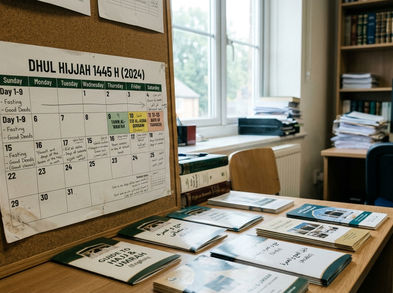
The 10th of Dhul-Hijjah brings Eid al-Adha and begins the sacrifice period. Recite Takbir-e-Tashreeq from the 9th to the 13th of Dhul-Hijjah, according to the cited Hanafi-Deobandi teaching tradition. Qurbani connects directly to the trials of Ibrahim (AS) and Ismail (AS), detailed in Surah Al-Saffat 37:102-107. A single family Qurbani does not cover everyone. Each financially eligible adult holds a separate Qurbani responsibility.
Eid Rulings and Festival Boundaries for Muslim Families
Muslim families positively mark Eid al-Fitr and Eid al-Adha with prayer, lawful joy, food, family ties, charity, and gratitude. Boundary questions inevitably arise. If Eid and Jumu'ah occur on the same day, Jumu'ah remains an important congregational obligation in the Hanafi-oriented guidance reflected in Dr. Qasmi’s writings. Major mosques such as Al-Masjid al-Haram and Al-Masjid al-Nabawi maintain both prayers when they coincide.
Address non-Islamic festival greetings carefully. Avoid words that affirm beliefs contrary to Islamic creed. You can easily maintain courtesy and good character with neighbors, colleagues, classmates, and relatives without compromising Tawhid. Regarding Christmas, Islam honors Isa (AS) as a Prophet and Maryam (AS) as his noble mother. This reverence stands firm while differing entirely from Christian theological claims about divinity and sonship.
Month-by-Month Worship Planning Example
A household method turns these rulings into reality. Protect obligations first. Set up a shared family calendar with three columns: fixed duties, recommended worship, and family logistics.
Three-Column Islamic Year Planning Sheet
| Fixed duties | Recommended worship | Family logistics |
|---|---|---|
| Obligatory fasting from Fajr to Maghrib; Qadha later for validly missed fasts | Namaz-e-Tarawih, Qur'an recitation, Itikaf in the last ten days | Adjusting meal times for Sehri and Iftaar |
Mark Ramadan obligations first. Schedule Qadha fasts next. Pencil in the six Shawwal fasts. Note the 9th and 10th of Muharram. Add Sha'ban preparation. Block out the first ten days of Dhul-Hijjah. Always check reliable local moon-sighting announcements before acting on the Ramadan start, Eid al-Fitr, Arafah, Eid al-Adha, and the sacrifice days.
Bottom Line: Place Qurbani budgeting before Dhul-Hijjah begins rather than waiting until Eid morning.
After Maghrib, a father in an English-speaking Muslim household sits at the kitchen table with a printed Hijri calendar. He marks the 9th and 10th of Muharram for fasting, circles the last ten nights of Ramadan in heavy ink, and writes "Qurbani" beside the 10th of Dhul-Hijjah. He slides the paper toward his children, pointing to the marked dates, and tells them that the calendar is simply a map for meeting Allah with prepared deeds.