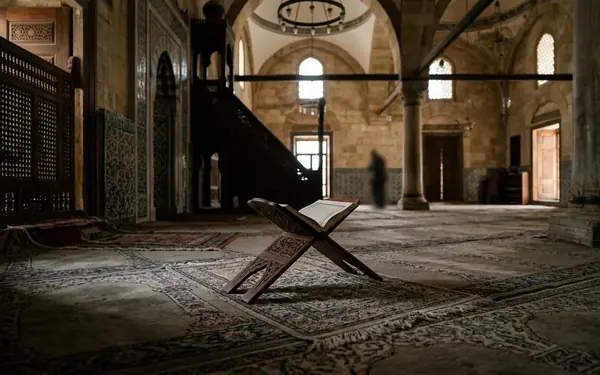
When the Prayer Time Arrives: Why Legal Categories Matter
A worshipper steps into the mosque during the narrow three to five-minute window before the Fajr Iqamah. The Adhan has already concluded. The mu’adhdhin stands ready to call the congregation to order. In this brief moment, a practical tension arises. Should the worshipper pray the two Sunnah Rak‘ahs first, or immediately join the forming rows?
Muslims recognize that Salah forms the center of daily life. Yet confusion frequently surfaces when distinguishing between what is obligatory, what is strongly emphasized, and what is purely voluntary. Understanding these moments requires knowing the legal hierarchy of worship: Farz, Wajib, Sunnah Mu’akkadah, Sunnah Ghair Mu’akkadah, and Nafl.
This framework reflects a Sunni Hanafi-Deobandi educational lens. Readers following Shafi‘i, Maliki, or Hanbali instruction will encounter different terminology and practical rulings in certain details.
The Practical Hierarchy: Farz, Wajib, Sunnah, and Nafl
Legal categories in Islamic jurisprudence are best understood by their consequences in daily worship rather than by abstract theory alone. Farz establishes absolute, guaranteed accountability. The five daily prayers serve as the clearest example because their obligation rests on decisive proof, independent of local custom or optional schedules.
Wajib in the Hanafi school remains compulsory. It is legally distinguished from Farz primarily by a difference in evidentiary strength. Missed obligatory Salah provides a proven example of Wajib in practice. A missed Fajr Farz is still owed as Qadha after sunrise, though the worshipper must strictly avoid praying during the actual sunrise interval.
Ongoing study of Hanafi texts confirms that Sunnah Mu’akkadah preserves the emphasized practice maintained by Prophet Muhammad (PBUH). The two Rak‘ahs before Fajr hold exceptional status here. Neglecting Sunnah Mu’akkadah habitually carries spiritual seriousness, even if it does not reach the level of Farz.
Sunnah Mu’akkadah and Nafl: Building a Devotional Routine
The Fajr Sunnah anchors the daily devotional routine because it forces a real-time decision. When the congregation has already begun, the worshipper must evaluate the context. If they can finish quickly away from the main row and still catch the congregation, the decision looks different than if the Imam is already nearing Ruku‘ or the final sitting.
Reports from Companions such as Abdullah ibn Mas‘ud and Abdullah ibn Abbas demonstrate the practice of praying the Sunnah separately behind a pillar or away from the row when the congregation is underway.
Field Note: A common failure case occurs when a worshipper starts two long voluntary Rak‘ahs after the Iqamah has begun, misses the opening of the Farz congregation, and wrongly treats Nafl as if it can compete with Jama‘ah priority.
Nafl prayers function as flexible devotional openings rather than replacements for obligations. These include Tahajjud after sleeping, Tahiyyatul Masjid upon entering a mosque, and voluntary prayers before Jumu‘ah where applicable. They must be scheduled around restricted prayer periods. The restricted times include after Fajr until sunrise, during sunrise, at zenith, during sunset, and after Asr until sunset.
Missed Salah: Adaa, Qadha, and the Weight of Negligence
Adaa refers to a prayer performed inside its prescribed time. Qadha is a missed obligatory prayer performed after its time has ended.
Deliberate negligence in Salah is treated as a grave matter in Islamic law and spirituality. Accidental missing through sleep or forgetfulness differs fundamentally from careless abandonment. Transmitted precedents carefully distinguish these states. A missed prayer due to sleep during travel and delayed prayers during battle contexts demonstrate that making up missed Salah is rooted in early practice, not merely later legal reasoning.
Textual analysis by Mohammad Najeeb Qasmi establishes that the obligation of Qadha remains a strict duty regardless of the reason for the delay.
Important: Assuming that praying extra Tahajjud cancels out carelessness with Fajr is a critical error. Nafl devotion never replaces missed Farz obligations.
Timing, Khushu‘, and Congregational Discipline
Knowing whether an act is Wajib, Sunnah, or Nafl does not replace the requirement for Khushu‘ and Khudhu‘. Khushu‘ defines the inward attentiveness and submission of the heart. Khudhu‘ governs outward humility and bodily stillness during Ruku‘, Sujud, Qoma, and Tashahhud.
Timing rules structure this discipline. Angel Gabriel’s demonstration of prayer times and Hanafi discussions of Asr timing show that prayer operates within revealed boundaries—not personal convenience. Though juristic application of timing boundaries varies slightly across regions, the underlying demand for physical stillness remains universal.
Practical disruptions often destroy this focus within roughly 30 to 90 seconds of entering the mosque. A phone not silenced, rushing frantically into the row, beginning Nafl after Iqamah, or speaking while the congregation is forming all break the optimal state of worship.
A Simple Daily Method for Prioritising Worship
A structured daily method prioritizes worship effectively. First, secure the Farz. Second, repair missed obligations through Qadha where needed. Third, maintain Sunnah Mu’akkadah. Finally, add Nafl according to energy and time.
Nafl should never be used to compensate emotionally for neglecting Farz. The foundation must remain the five daily prayers. A pocket-notebook audit helps maintain this discipline. Create three columns: Farz prayed on time, Qadha owed, and the Sunnah/Nafl habit for the day. Set a sustainable voluntary target, such as Tahajjud once or twice in a seven-day week, rather than every night. This keeps the routine realistic for students, workers, and parents.
Bottom Line: Build your routine from the ground up. Secure the obligatory before expanding into the voluntary.
The house is quiet at around 10:30 PM. A university student sits at his desk, closing his laptop after finishing an assignment. He opens a small, worn notebook, places a checkmark in the first column for Isha, and writes down one Qadha prayer he needs to make up from a missed Asr last month. He sets his phone alarm for about 5:15 AM, ensuring enough time for the Fajr Sunnah before the Iqamah, and turns off the lamp.