Purification Is a Worship System, Not a Pre-Prayer Formality
Correct purification is one of the most practical ways to protect prayer, Qur’an handling, and daily worship from recurring doubt. Many approach ablution as a hurried routine. Treating it as an ordered worship system changes that dynamic entirely.
This guide provides English-reading Muslims with reliable, accessible rulings on Wudhu, Ghusl, Tayammum, and Masah. The compiled guidance from Mohammad Najeeb Qasmi establishes a clear framework for these practices. It serves as a Hanafi-oriented educational summary rather than a personal fatwa for unusual medical, marital, or hardship cases.
In practice, this means identifying the required purification before Salah, knowing which acts are obligatory, recognizing recommended refinements, and avoiding common mistakes like missed heels or repeated washing driven by uncertainty.
Key Terms That Prevent Confusion
Many purification mistakes stem from mixing categories. A person who confuses Masah with full washing may perform the wrong action entirely. Understanding the vocabulary prevents these errors before they happen.
- Wudhu: Minor ritual ablution required before Salah and, according to the cited juristic position, before touching the physical Mus-haf.
- Ghusl: Full-body ritual purification for Hadse Akbar, which includes states such as Janabah.
- Tayammum: Dry purification using clean earth or clean earth-based material when water cannot be used or is unavailable.
- Masah: Ritual wiping with wet hands. This includes wiping over the head in Wudhu and the separate practice of wiping over footwear.
- Khilal: Passing wet fingers through areas such as the beard, fingers, or toes to ensure water reaches the skin.
- Siwak: Cleaning the teeth or mouth before Wudhu.
- Fardh and Wajib: Binding duties that must be fulfilled.
- Mustahabbat: Recommended acts that bring additional reward.
- Makruh: Disliked conduct that should be avoided.
How to Perform Wudhu With Obligations, Sunnah Care, and Common Corrections
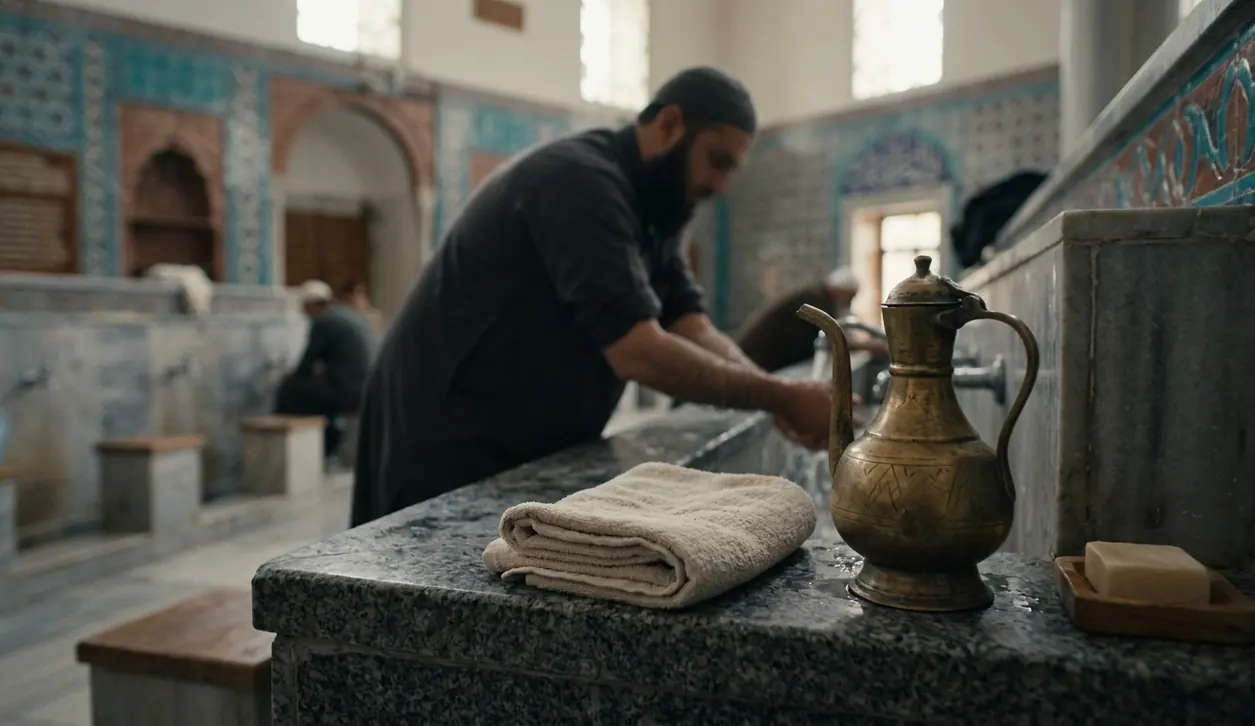
The Wudhu sequence follows the physical order a person actually performs at a sink or washing area. You make the intention, wash both hands, rinse the mouth, clean the nose, wash the full face, wash both arms including the elbows, perform Masah over the head with wet hands, and wash both feet including the ankles.
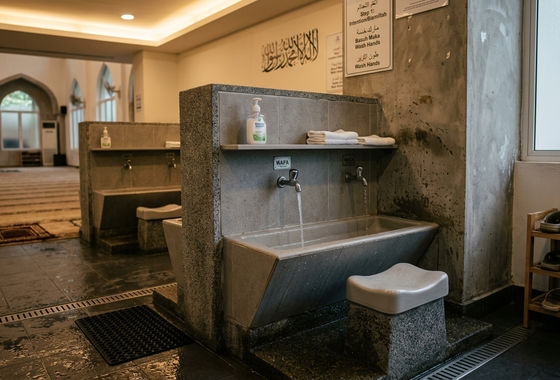
Mandatory actions form the core of the ablution. Desirable refinements, such as using a Siwak and performing careful Khilal of the beard, fingers, and toes, elevate the practice to an optimal standard. Masah over the head requires actual moisture on the palm. Merely touching dry hair does not fulfill the described act of wiping.
A steady Wudhu for an adult normally fits within a short pre-prayer routine of roughly 3 to 5 minutes when done carefully without obsessive repetition.
Important: Do not waste water. Do not leave limbs partly dry. Do not restart Wudhu after completion unless invalidation is certain.
Physical environment often dictates where mistakes happen. Consider a common failure case: a person washes their feet quickly while standing at a shallow basin, and the back of one heel remains dry. The Wudhu problem here is not a lack of intention, but incomplete water contact. Commonly missed areas include the back of the heels, the elbow edge where water may not run naturally, spaces between toes, and tight areas under rings or watch straps.
When Ghusl Becomes Required and How to Complete It
Separating the cause of major impurity from the method of washing prevents unnecessary delays in prayer. Ghusl is required for major impurity, including the discharge of Mani and intercourse where the Hashfa enters. The juristic tradition associated with Imam Tahawi and later Hanafi scholars outlines these boundaries clearly.
Not all physical discharges trigger a full bath. A frequent failure case occurs when someone experiences Mazee, assumes every sexual discharge requires Ghusl, and delays their prayer unnecessarily. The practical correction is simple: Mazee requires washing the affected area and performing Wudhu, not a full Ghusl.
The practical Ghusl sequence requires deliberate attention to detail:
- Remove any visible physical impurity from the body.
- Perform a complete Wudhu.
- Pour water over the head and the entire body.
- Ensure water reaches every part of the skin.
Areas that need deliberate attention include the skin under rings, the navel, skin folds, behind the ears, between the toes, and hair roots where washing is strictly required.
Tayammum: The Dry Ablution for Necessity, Travel, and Harm
Tayammum operates as a necessity ruling, not a convenience substitute for Wudhu or Ghusl. The ruling depends entirely on genuine inability, harm, or the total absence of water.
The basic method requires making an intention, striking or placing the hands on clean earth or a clean earth-based material, wiping the face, and then wiping the arms according to the relevant juristic method.
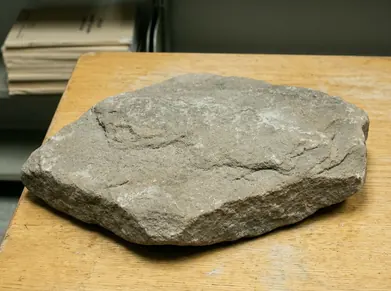
Valid excuses for Tayammum include illness where water use would worsen harm, severe cold without safe access to warm water, travel where water is genuinely unavailable, and situations where obtaining water would cause the prayer time to expire. Tayammum stands in place of Wudhu or Ghusl only while the valid excuse remains. Once water becomes usable again, or the harm-based excuse ends, the normal water-based purification requirement returns immediately.
Field Note: A traveler who has a bottle of usable water in their vehicle but performs Tayammum for speed is making a critical error. The dry ablution ruling is tied to genuine inability or harm, not convenience.
Masah on Socks, the Mus-haf, and Other Daily Purification Questions
Classical discussions use the word 'socks' to cover several distinct types of footwear. Understanding these categories is essential before applying the wiping rulings.
- Khuffain: Traditional leather socks.
- Mujalladain: Cotton socks with leather on the upper and lower sides.
- Muna'alain: Socks featuring leather soles.
- Jurrab: Ordinary cotton, nylon, or wool socks.
The Hanafi emphasis associated with Imam Abu Hanifah establishes that wiping over proper Khuffain is an established practice. Conversely, ordinary thin Jurrab are treated with greater caution in classical Hanafi rulings. Maulana Abdur Rahman Mubarak Puri and Shaikh Nazir Husain Dehlawi are frequently cited in broader discussions of sock wiping. While classical texts outline these boundaries, application depends on the specific material composition of the footwear.
For touching the physical Mus-haf, Wudhu is required. This position is supported through narrations linked to Umar bin Hazm and juristic affirmations from scholars such as Ibn Taymiyya and Abdul Aziz bin Baz.
Related daily etiquette reinforces this mindset of reverence. This includes avoiding facing the Qiblah while relieving oneself—adhering to the strict Hanafi position, and ensuring the Satr is fully covered before initiating Salah.
A Three-Minute Purification Check Before You Pray
Ongoing community education shows that a structured routine eliminates pre-prayer anxiety. Instead of wondering if your ablution is intact, ask three specific questions before standing for Salah.
First, am I in a state of minor or major impurity? Second, is water usable, or do I have a valid excuse requiring Tayammum? Third, are my clothes, body, Satr, and prayer place ready?
Bottom Line: A careful Wudhu plus a final readiness glance easily fits into approximately 3 minutes when no Ghusl or clothing change is required.
Before your next prayer, walk to the sink, perform Wudhu slowly exactly once, physically check your heels and elbows for dryness, and begin Salah immediately without repeating the washing from doubt.