Umrah as an Inherited Rite, Not an Improvised Journey
Umrah is rooted in the Prophetic model of entering sacred space with ihram, tawaf, sa‘i, and release from ihram. Modern travel speed often replaces ritual preparation. The first preventable errors usually occur when a pilgrim thinks of Umrah as travel management first and worship second.
English-reading pilgrims frequently move under a group schedule. Buses, hotel check-ins, and crowd pressure compress decision time to a few minutes. The transition from an air-conditioned terminal to the sacred precinct happens rapidly, leaving little room to learn the rites on the move.
The visible Umrah sequence forms the spine of the journey: ihram before crossing the miqat, seven tawaf circuits, seven one-way sa‘i walks, hair cutting or shaving, then release from ihram. For first-time groups, teach the sequence once during the final week or two before departure. Repeat it during the last day before the journey to Makkah.
The main concern here is common practical mistakes. It bypasses rare legal disputes and complex penalty rulings to provide clear guidance for the physical realities of the pilgrimage.
Mistakes Before Ihram: Intention, Miqat, Clothing, and Readiness
Treat ihram as a legal and devotional state, not a costume change. In pre-departure planning, separating body preparation, wearing the cloths, and making the intention prevents early violations.
Complete grooming that cannot be done after ihram, such as trimming nails or removing unwanted hair, several hours before entering ihram. Pack unscented soap, unscented wipes, and any regular medication in hand luggage before leaving for the airport or bus station. Checked bags may not be accessible before the miqat.
Put a miqat question into the itinerary review in the weeks before travel. Ask whether the group will enter ihram at the airport, on the aircraft, at a transit point, or before a coach journey toward Makkah. A common failure case occurs when a pilgrim travelling by air plans to enter ihram after reaching the hotel. They cross the miqat while already intending Umrah, triggering a violation before the rituals even begin.
For men, an operational error is changing into two white cloths but continuing to wear ordinary stitched garments after the intention has been made. For women, the error is adding hardship by assuming a special uniform is required instead of modest, secure clothing.
Tawaf Errors Around the Ka‘bah: Direction, Count, Crowds, and Reverence
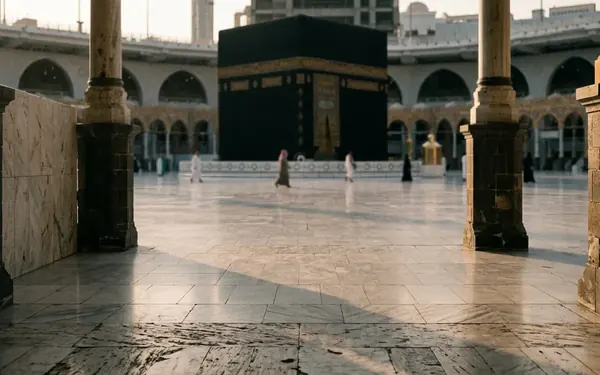
Crowd-safe ritual order comes before advanced legal categorisation. Each tawaf circuit begins and ends at the line or marker aligned with the Black Stone. Counting should restart mentally at that point, not at a random opening in the crowd.

A low-tech counting method works best in this dense environment. Move one bead, fold one finger, or tap one of seven saved marks on a phone after each completed pass of the Black Stone alignment. Update the count only at the same reference point each time.
If a family performs tawaf together, assign one adult counter and one adult crowd-watcher before entering the mataf area. Do not let both roles fall to the same exhausted pilgrim.
Kissing or touching the Black Stone is not required for the validity of tawaf when access involves pushing, climbing over people, or distressing other worshippers. Reverence must not become aggression.
Sa‘i Between Safa and Marwah: Common Confusion in a Simple Rite
This rite is simpler than tawaf. Confusion often comes from fatigue rather than complex movement.
Sa‘i starts at Safa and ends at Marwah. Safa to Marwah is round one. Marwah to Safa is round two. The seventh one-way walk ends at Marwah.
The most practical counting cue is destination-based. After every arrival, say softly, "one at Marwah," "two at Safa," continuing until "seven at Marwah." Counting a return trip as a single combined lap is likely to cause confusion.
Men hasten only within the marked green-light area where able and safe. They should return to normal walking outside that section. Women are not required to run. Elderly, ill, or mobility-limited pilgrims may use assistance without treating that assistance as a spiritual defect.
Ending Umrah Incorrectly: Shaving, Trimming, and Leaving Ihram Too Early
Many pilgrims relax too early once sa‘i feels complete. Make hair removal the final legal checkpoint.
The post-sa‘i sequence should be handled as a group checkpoint. Finish the seventh walk at Marwah, move out of the walking flow, arrange proper shaving or trimming, then confirm release from ihram. Men should either shave or trim properly. Women cut a small portion of hair according to accepted juristic guidance rather than relying on a theatrical or purely symbolic touch of scissors. While juristic applications vary slightly across the recognized schools of Islamic law, the Hanafi framework prioritizes ensuring the required amount of hair is actually removed.
A frequent failure case involves a family finishing sa‘i, taking celebratory photos, and the men changing back into ordinary stitched clothing before shaving or trimming.
Important: Do not resume perfume, ordinary stitched clothing for men, or marital intimacy between the end of sa‘i and the actual completion of the hair-cutting step.
For family groups, confirm children, elderly relatives, and first-time pilgrims individually before leaving the area or returning to the hotel. One person may assume the group’s completion includes their own.
Mistakes of Adab: Phones, Arguments, Fatigue, and Overcrowding
Widen the lens from validity to adab. Many damaging Umrah mistakes are not captured in a simple fiqh checklist. Filming excessively, blocking pathways, arguing with family members, and losing humility in sacred places degrade the worship experience.
Fatigue management helps maintain focus. Dehydration, lack of sleep, and overambitious schedules lead to avoidable ritual mistakes. Build a short rest window of about half an hour to an hour between hotel arrival and entering a crowded ritual area when travelling with elderly pilgrims, children, or anyone recovering from a long flight.
Field Note: Set a family meeting point before entering dense areas. Choose a fixed exterior landmark, a hotel lobby location, or a clearly identifiable gate area rather than a moving point inside the crowd. Keep passports, permits, hotel cards, and emergency contact numbers in two forms: one physical copy with the pilgrim and one digital copy accessible to a trusted family member.
Check current entry, permit, and access procedures through the official Nusuk guidance platform during the final few weeks before travel. Check again in the last few days if the group schedule changes. Administrative platform guidance is for current travel access and scheduling. It should not be treated as a substitute for a scholar’s ruling on ihram, tawaf, sa‘i, or penalties.
If a Mistake Happens: Pause, Verify, and Correct the Rite Properly
Panic often worsens mistakes. Stop the spread of the mistake before analysing the mistake itself. Identify the exact stage and avoid guessing.
Distinguish between mistakes that can be corrected immediately—such as recounting tawaf or completing a missed step, and matters that may require a specific juristic ruling.
Consider a pilgrim who is still in tawaf and genuinely doubts whether six or seven circuits have been completed. They should resolve the uncertainty before moving to sa‘i. Commonly, the cautious course is to build on what is certain and complete the remaining circuit, then ask a reliable scholar or trained guide if the situation is more complicated.
Do not turn a doubtful memory into a public argument in the mataf or sa‘i area. Appoint one person to ask the guide while the rest of the group waits away from the walking path.
Bottom Line: Before departure, write the Umrah sequence on one small card: ihram before miqat, tawaf, sa‘i, hair cutting, release from ihram. Keep it in the passport pouch or phone case.
When confusion strikes in the mataf, stepping out of the moving flow for a few minutes can prevent a single memory lapse from cascading into a compromised pilgrimage.