What Must a Pilgrim Do, in What Order, and Why?
How exactly should a pilgrim perform Umrah and Hajj correctly from preparation to farewell? The journey requires moving through specific physical locations while maintaining a precise state of ritual purity and devotion. This guide follows the ritual path from preparation before travel through the farewell Tawaf before leaving Makkah.
Dr. Mohammad Najeeb Qasmi’s guidance emphasizes that the ritual path demands strict adherence to sequence. Key terms in this route include Ihram, Meeqat, Talbiyah, Tawaf, Sa'ee, Halaq, Qasr, Rami, Dum, Haram, Hil, and Tawaf al-Ziyarah. The devotional thread connects the pilgrim’s response in Talbiyah with the call associated with Ibrahim (AS). That obedience carries directly into Tawaf, Sa'ee, sacrifice, and restraint from harm.
Important: This is a Sunni Hanafi-oriented practical guide. A pilgrim with a medical, menstrual, proxy, missed-wajib, or travel-status question should still ask a qualified scholar before acting.
Choose the Correct Form: Ifrad, Tamattu, or Qiran
The decision point occurs before Ihram because the intention made at the Meeqat changes the rest of the route. A pilgrim arriving early with time for Umrah is usually routed differently from a pilgrim arriving on the 7th of Dhul-Hijjah.
Ifrad means entering Ihram for Hajj only, without performing Umrah as part of the same Ihram. Tamattu means performing Umrah first, exiting Ihram after Halaq or Qasr, then entering Ihram again for Hajj on or before the 8th of Dhul-Hijjah. Qiran means joining Umrah and Hajj in one Ihram. The pilgrim remains under Ihram restrictions until the release point during the Hajj sequence.
Tamattu is common for international pilgrims because it allows Umrah first, then release from Ihram until the Hajj days. Qiran requires remaining in Ihram for both rites, demanding stronger preparation and endurance. This decision must be made before reaching the Meeqat. You must know your arrival date, first hotel location, whether Umrah is scheduled before the 8th of Dhul-Hijjah, and whether the package moves pilgrims directly to Mina.
Field Note: Tawaf al-Qudum, Sa'ee placement, and release from Ihram differ between Ifrad, Tamattu, and Qiran. A pilgrim should not copy another pilgrim’s sequence unless the Hajj form is exactly the same.
Enter Ihram at the Meeqat with Intention and Talbiyah
Ihram operates as a legal and devotional state, not merely a clothing change. The sequence requires preparing the body and clothing, reaching the Meeqat or its alignment, making the intention, and beginning the Talbiyah.
For men, Ihram clothing is normally two unstitched sheets. For women, normal modest clothing is used while observing the rules of Ihram. The Meeqat serves as the designated boundary where a pilgrim must enter Ihram before proceeding for Hajj or Umrah. Hil refers to the area between the Meeqat boundaries and the Haram, while the Haram refers to the sacred precinct of Makkah.
Talbiyah begins after the intention. It includes the specific words: 'Labbayk Allahumma Labbayk'. A traveler who qualifies for Qasr shortens four-rak'ah fard prayers to two rak'ahs when praying alone or as the leading traveler. When following a resident imam in congregation, the pilgrim prays the full four rak'ahs according to the local arrangement.
The Method of Performing Umrah Step by Step
The Umrah route is a continuous walking sequence. You enter Masjid-e-Haraam in a state of Ihram and maintain the Talbiyah until Tawaf begins.
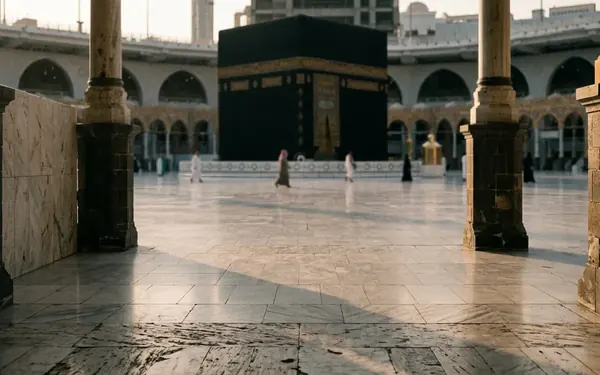
Tawaf consists of seven circuits around the Ka'bah in the Mataaf. You begin from the direction of Hajr-e-Aswad when possible without pushing or harming others. Men perform Idtiba' during the relevant Tawaf by placing the upper garment under the right armpit and over the left shoulder. Ramal applies to the first three circuits for men when crowd conditions allow. The remaining four circuits are walked normally.
Sa'ee consists of seven passages between Safa and Marwah. The walking begins at Safa and ends at Marwah.
Classical Hanafi scholarship also notes that the timing of Umrah carries specific restrictions. According to the caution attributed to Imam Abu Hanifah, performing Umrah from the 9th to the 13th of Dhul-Hijjah is Makroohe Tehreemi. A Tamattu pilgrim must schedule Umrah before that period begins.
The Hajj Sequence from 8th to 13th Dhul-Hijjah
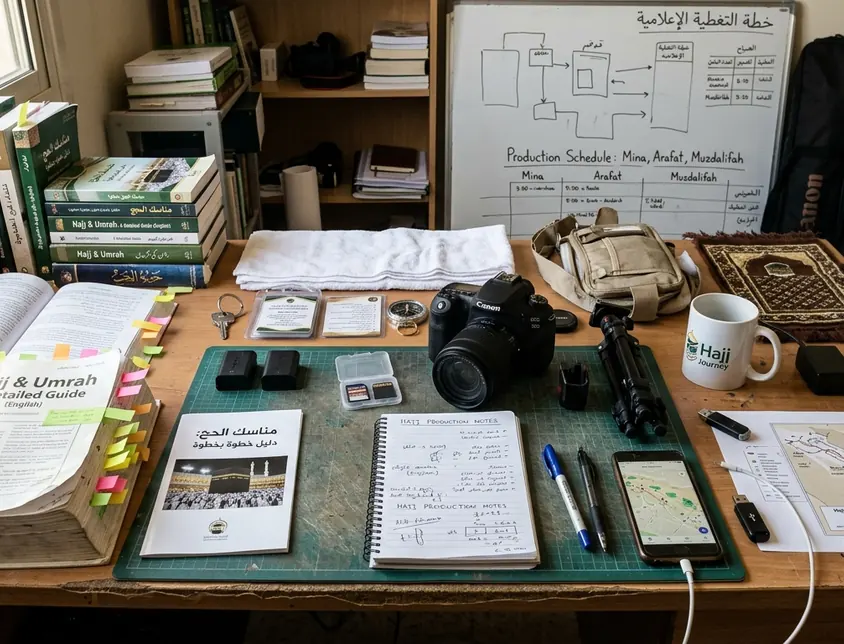
The Hajj days are organized by date rather than by topic. The pilgrim’s legal duties, luggage needs, transport timing, and crowd exposure change sharply from one sacred site to the next.
- 8th Dhul-Hijjah: Pilgrims proceed to Mina and remain there for the beginning of the Hajj days when arrangements permit. Fajr on the 9th is traditionally prayed there before departure.
- 9th Dhul-Hijjah: Pilgrims proceed to Arafat for Wuquf. This central standing requires calm, dua, and repentance. Departure to Muzdalifah takes place after sunset, not by praying Maghrib early in Arafat under normal Hajj arrangements.
- Night of 10th Dhul-Hijjah: Pilgrims stay in Muzdalifah according to the applicable ruling and group arrangement, then move toward Mina for Rami.
- 10th Dhul-Hijjah: The main sequence includes Rami, sacrifice for Tamattu or Qiran, Halaq or Qasr, and Tawaf al-Ziyarah within its valid time window.
In Hanafi sequencing, Imam Abu Hanifah treats the order of Rami, sacrifice, and Halaq as obligatory. Imam Shafi'i treats the order as Sunnah. Imam Muhammad’s discussion of ignorance can affect how a penalty is assessed if the order is broken.
Tawaf and Sa'ee in Hajj: Which Ones Are Required?
Pilgrims often hear the word 'Tawaf' and assume each instance carries the same legal weight. Differentiating them prevents critical omissions.
Tawaf al-Qudum serves as the arrival Tawaf for those for whom it applies, especially in Hajj contexts before the main days. Tawaf al-Ziyarah stands as the central Hajj Tawaf. It is mandatory and essential to completing Hajj. Tawaf al-Wida' acts as the farewell Tawaf for outsiders before leaving Makkah.
The number and timing of Sa'ee differ by Hajj form. An Ifrad, Tamattu, or Qiran pilgrim may not have the same Sa'ee placement in the full journey. Imam Abu Hanifah was born around 80 AH, and later Hanafi commentators such as Badruddin al-'Aini discuss sequencing and legal consequence within the broader tradition to preserve the correct order of worship.
Rulings That Prevent Costly Ritual Mistakes
Understanding consequence levels helps prioritize actions. Wajib means legally required with consequence if omitted. Sunnah is the Prophet’s established way. Mustahabb is recommended. Makrooh is disliked, while Makroohe Tehreemi is prohibitively disliked and treated seriously in Hanafi law.
Dum or Dam refers to an animal sacrifice required as atonement for certain ritual violations. This usually applies to missed wajib acts or Ihram violations. Halaq means shaving the head completely. Qasr means trimming the hair. In Hanafi discussion, Imam Abu Hanifah defined a minimum related to one-quarter of the head for men.
Abdullah ibn Umar (RA) is connected with narration on the prohibition of partial shaving. This supports caution against casual or symbolic clipping that does not meet the legal threshold. Abdullah ibn Abbas (RA) also narrates reports used in discussions of proxy pilgrimage for those unable to perform it themselves, including inquiries linked to Juhaina and Khath'am.
Consider a common mistake. A Tamattu pilgrim performs Umrah correctly, exits Ihram, then clips hair again after entering Hajj Ihram before the 10th Dhul-Hijjah release point. This is not a harmless grooming issue. It must be referred to a reliable scholar for the Dum discussion.
Practical Management in Makkah, Mina, Arafat, and Muzdalifah
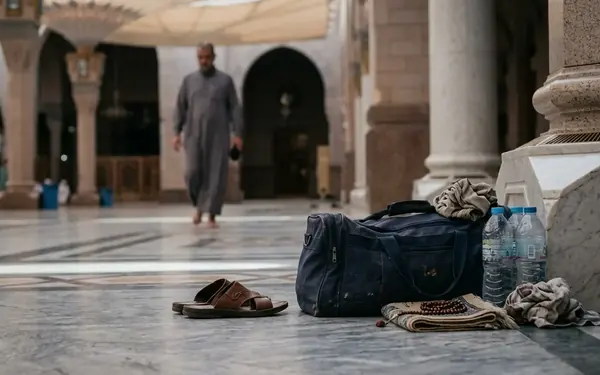
Ritual knowledge must translate into physical movement planning. Losing footwear before Tawaf or arriving at Jamarat without hydration disrupts worship.
A small Ihram bag should carry unscented tissues, a labeled footwear pouch, basic medication, a water bottle, a phone power bank, hotel card, and permit copy where required. In Masjid-e-Haraam, pilgrims should agree on a meeting point outside the densest Mataaf flow rather than directly beside the Ka'bah or Hajr-e-Aswad line.
For Mina, Arafat, and Muzdalifah, the group must record the tent zone, gate marker, transport pickup point, and the name or number used by the certified operator. Pilgrims may encounter the Mashaer Railway, public buses, walking corridors, or service-provider transport. The actual route can change according to permits and crowd-control instructions.
While classical texts establish the baseline, modern crowd dynamics require adapting the physical execution of these rites. Movement instructions should be verified through the licensed operator and official Saudi pilgrimage guidance before each transfer. A group might memorize that Arafat is on the 9th, but failing to record the post-sunset transport point often leads elderly members to separate from the operator during the move to Muzdalifah.
Pre-Departure Practice Run
The final preparation phase turns abstract knowledge into a personal route sheet. Families should rehearse the order aloud at least once before departure. Elderly pilgrims need to be separately shown the Meeqat, hotel, Mina tent, and post-Arafat movement plan.
A simple rehearsal method requires mapping the exact ritual path. The mistake-prevention column should list three items: what requires patience, what may require Dum, and which questions must be asked before travel.
Bottom Line: Write your Hajj type, Meeqat location, and first Tawaf plan on a single sheet of paper, then review that specific sequence with your group leader before packing your bags.