The Core Passage: Worship Allah Alone
What does it mean to build an entire Muslim life upon Tawhid?
“I did not create jinn and mankind except to worship Me.” Surah al-Dhariyat 51:56
This verse does not begin with a debate. It begins with purpose. Before Tawhid becomes a term in a lesson, it is the truth that explains why we were created, why worship matters, and why the heart feels scattered when it bows to too many masters.
Tawhid is not only a doctrinal label. It gathers creation, worship, intention, fear, hope, obedience, and repentance under one reality: Allah alone is the Lord, and Allah alone deserves worship.
From the Verse to Ordinary Life
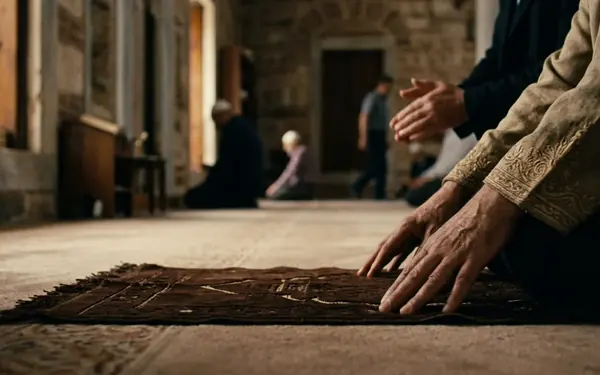
The verse reaches the prayer mat, but it does not stop there. It reaches the way a person earns money, speaks in anger, asks for help, raises children, carries grief, and returns to Allah after sin.
I find this opening order important: the Qur’an gives us purpose before we start arranging categories. A Muslim life is not built by adding worship to the edge of daily concerns. Daily concerns are carried into worship when the servant knows whom they belong to.
What Tawhid Means in the Life of a Believer
Tawhid means affirming the oneness of Allah in His lordship, His sole right to be worshipped, and His perfect names and attributes. He creates, provides, gives life, causes death, commands, forgives, judges, and shelters. No created thing shares His divinity.
That definition is necessary. Still, a person can repeat a correct definition while the heart remains pulled in several directions.
Knowing and Living Are Not the Same
To know that Allah is One is to reject partners in belief. To live as though Allah is One is to let that belief govern the first decision of the morning and the last worry at night. It means the believer does not treat wealth as the true giver, reputation as the true protector, or people as the final judges of worth.
The heart becomes unified when its worship is unified.
Readers familiar with the practical adab often emphasized by the author Mohammad Najeeb Qasmi will recognize the same concern here: belief must reach conduct. A servant who says La ilaha illa Allah is learning to measure fear, love, hope, obedience, and dependence by that statement.
Bottom Line: Tawhid is not only that Allah exists and is One. It is that Allah alone has the right to command the heart, receive worship, and be trusted above every created cause.
From Belief to Worship: Prayer, Du‘a, and Sincerity
Tawhid becomes visible before noon.
A believer wakes for Fajr after true dawn and before sunrise. The body leaves sleep because Allah called. The tongue recites because Allah revealed. The forehead lowers because no one deserves that surrender except Him.
Where Ikhlas Begins
Ikhlas is the inner fruit of Tawhid. Worship is not performed for reputation, family pressure, social identity, or the quiet wish to be seen as religious. It is performed for Allah.
This does not mean a believer never feels distraction. It means the believer keeps returning the intention to Allah. Before giving charity, pause. Before studying Qur’an or Islamic knowledge, pause. Before correcting someone, pause. Ask: “Is this for Allah, or am I feeding something in myself?”
- Begin the day with Fajr, even when no one praises the effort.
- Ask Allah in du‘a before asking people for assistance.
- Renew intention before charity, study, service, and advice.
- Repent quickly when worship becomes performative.
- Show gratitude for small openings, not only large relief.
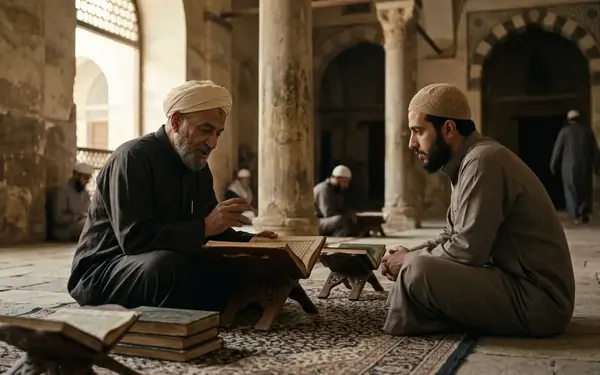
The Sunnah of Prophet Muhammad (PBUH) teaches worship as a complete pattern of servitude: prayer, remembrance, repentance, mercy, patience, and gratitude. Tawhid gives that pattern its center.
Field Note: When helping a child or a new learner understand sincerity, I prefer small examples. “Give the coin for Allah.” “Read the page for Allah.” “Say sorry for Allah.” These sentences are simple enough for a home, but deep enough for a lifetime.
The Quiet Dangers That Weaken Tawhid
Some dangers are loud. Others enter quietly.
A person may avoid obvious idolatry while still allowing superstition, showing off, fear of people, or excessive dependence on created means to weaken the heart. An object is treated as if it independently protects. Omens are taken as if they control the future. A prayer is lengthened because someone respected is watching. A truthful word is swallowed because people seem more frightening than Allah.
Means Are Not the Problem
Using lawful means is not contrary to Tawhid. Medicine, employment, savings, planning, study, and asking trustworthy people for help all have their place. The problem begins when the heart treats those means as independent of Allah.
This is a devotional warning for self-examination, not a license to accuse named individuals or communities. The safer path is humility: notice the weakness, repent, and return the heart to Allah before judging the state of another person.
Repentance belongs in the same conversation as warning. If riya enters worship, turn back. If fear of people grows too large, ask Allah for firmness. If a habit has given created things too much power in the imagination, cut the habit and replace it with du‘a, Qur’an, and lawful action.
Important: Do not confuse caution with superstition. Locking the door is a lawful means. Believing an object protects independently of Allah is a wound in Tawhid.
Tawhid at Home: Justice, Mercy, and Responsibility
The home tests Tawhid because there is often no audience.
Breakfast conversations, household disagreements, money owed, promises made, and inheritance responsibilities reveal what a person believes about Allah’s watchfulness. Public manners are easier. Private restraint is heavier.
When Belief Enters Speech
The tone reaches a spouse. A child remembers the insult. Neglect is felt by a parent. A neighbor notices whether promises are kept. Tawhid tells the believer that none of this is outside worship, because Allah sees what people may never see.
- After harsh words, apologize without turning the apology into another argument.
- Before correcting a spouse, child, parent, neighbor, or community member, check whether the intention is guidance or victory.
- Teach children to work hard while relying on Allah, not to choose between effort and trust.
- Avoid arrogance in religious argument, especially when the point is correct but the manner is harmful.
- Handle money, debts, gifts, and inheritance with the knowledge that Allah knows what is hidden.
Family life does not need decorative religious language to become worship. Sometimes Tawhid appears as a lowered voice. Sometimes it appears as a receipt kept carefully, a promise honored, or an apology offered before pride has cooled.
Field Note: In community learning, the most useful family question is often not “Who won the argument?” but “What would this moment look like if both people remembered that Allah sees it?”
Reliance on Allah When Life Becomes Heavy
Tawakkul is Tawhid under pressure.
Illness, debt, grief, uncertainty, and disappointment strain the routines that usually make us feel steady. In those moments, reliance on Allah is not passive resignation. It is worship with movement.
Trust That Still Takes Steps
The believer makes du‘a while seeking lawful treatment. For provision, the believer looks for halal income while trusting Allah. Repentance comes with continued responsible action. These paired actions protect the heart from two mistakes: pretending we control outcomes, and pretending trust means doing nothing.
Qur’anic guidance repeatedly gathers patience, hope, repentance, and trust. Patience keeps the tongue from rebellion. Hope keeps the heart from despair. Repentance keeps hardship from becoming only a complaint about circumstances. Trust places the outcome where it belongs: with Allah.
There is a difference between saying, “Nothing matters,” and saying, “I will do what is lawful, and Allah will decide what comes from it.” The first drains worship from effort. The second turns effort into worship.
Bottom Line: Tawakkul is not the absence of planning. It is planning without worshipping the plan.
A Morning Built on La ilaha illa Allah
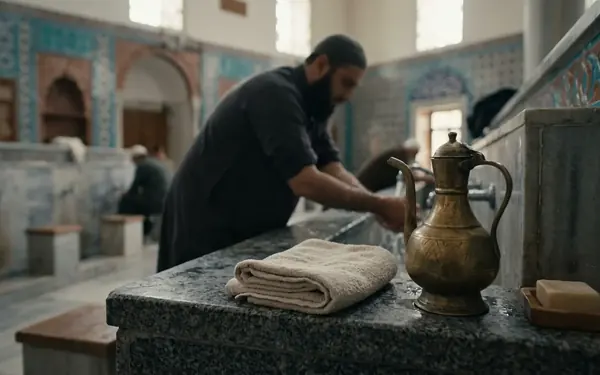
Before dawn, a believer wakes while the house is still quiet. The room is cold enough to make the blanket tempting. He sits up, remembers Allah, and walks to make wudu.
Water runs over tired hands and a sleepy face. Fajr is prayed before the day can fill itself with messages, errands, and demands. On the prayer mat, he asks Allah for lawful provision, forgiveness, steadiness, and a heart that does not chase praise.
Worship Beyond the Prayer Mat
At breakfast, a child spills milk. The first impulse is irritation, but he softens his voice. A debt reminder sits on the counter, and he decides to answer honestly instead of avoiding the person. Before leaving, he checks that his earnings today will remain clean, even if a shortcut would be easier.
This is where the verse returns: “I did not create jinn and mankind except to worship Me.” Worship is not trapped in one corner of the morning. It moves through earning, restraint, gratitude, service, and the small decisions no one records.
At the doorway, he pauses with his hand on the handle. The street outside is waking. He whispers, “La ilaha illa Allah,” then steps out choosing honesty, patience, and reliance before the day begins to ask anything from him.