Qur’an 33:21 and the Measure of a Muslim Life
Qur’an 33:21 names the Messenger of Allah ﷺ as the “excellent example” for the one who hopes in Allah, the Last Day, and remembers Allah much.
That verse gives the Muslim a measure before personality, culture, family habit, or public fashion can set the measure for us. The Seerah is not placed before the believer as a treasured biography only. It is a living pattern for intention, worship, family conduct, speech, courage, restraint, and service.
Reading the verse as a pattern
From a Sunni devotional and educational perspective, the Prophet Muhammad (PBUH) is not studied as an admired figure from a distant age. He is followed as the servant and Messenger whose life discloses how revelation becomes conduct. Readers shaped by Hanafi-Deobandi scholarship will recognize the concern for adab, disciplined worship, and careful transmission, yet the Prophet’s ﷺ example must never be reduced to one school’s questions alone.
The verse joins hope in Allah, certainty in the Last Day, and frequent remembrance. That matters. A person may know many incidents from the Seerah and still react from pride, hurry, or wounded ego. Qur’an 33:21 asks a deeper question: does remembrance of Allah reshape the way I answer, spend, forgive, lead, and return people’s rights?
The Seerah as Moral Training, Not Mere Memory
Memorizing the events of Makkah, the Hijrah, Madinah, and the Farewell Pilgrimage is valuable, but recall alone does not train the heart. The early Makkah years teach patience under pressure. The Hijrah teaches trust when the road is uncertain. Madinah teaches worship, law, community, and restraint with power. The Farewell Pilgrimage gathers the message into worship, justice, and accountability before Allah.
From chronology to formation
The common mistake is to collect scenes and leave the self untouched. A sermon that praises the Prophet ﷺ emotionally but never asks the listener to change speech, anger, money dealings, or family conduct becomes devotional sentiment without formation.
Seerah study begins to form character when belief and behavior are read together. Tawhid produces humility because no created thing deserves ultimate fear or flattery. Prayer produces discipline because the day is no longer owned by impulse. Patience produces mercy because the believer learns to carry pain without turning it into permission to harm. Certainty in the Hereafter produces restraint because every word is moving toward an account.
Bottom Line: The Seerah builds character when every incident is read with two questions: What did the Prophet ﷺ reveal about Allah, and what does this require from me today?
A simple reading practice
- Read one incident without rushing to extract a slogan.
- Name the belief being taught: trust, mercy, patience, justice, gratitude, or fear of Allah.
- Choose one behavior that must change before the next prayer or the next conversation.
Mercy Under Pressure: The Prophetic Response to Harm
Mercy is often the first real test of Seerah-based character. The Prophet ﷺ endured rejection, mockery, loss, and hostility without allowing pain to become cruelty.
This is not soft language for avoiding responsibility. Prophetic mercy includes forgiveness when forgiveness can heal, firmness when firmness protects rights, and concern for people’s guidance rather than their humiliation. The difference is easy to miss when we feel wronged. Anger wants a target. Mercy asks what will please Allah and what may still open a door to guidance.
Where this lesson lands now
In family disagreements, mercy may begin with lowering the voice before correcting the mistake. In online arguments, it may mean refusing to turn a religious point into a public shaming session. In mosque disputes, it may require separating the issue from the dignity of the person raising it.
- At work, mercy can mean being firm about a boundary without spreading someone’s fault.
- Across generations, mercy may sound like patient translation, not sarcasm toward elders or youth.
- In community conflict, mercy does not erase accountability, but it removes the appetite for disgrace.
Firmness without ego
The Prophet’s ﷺ restraint teaches a hard balance: do not be passive about harm, and do not let harm make you unjust. Quoting one Seerah moment to excuse harshness, while ignoring the Prophet’s ﷺ restraint, patience, and concern for guidance, turns sacred history into a weapon for the ego.
Important: If a Seerah lesson makes the tongue sharper, the heart more self-satisfied, and reconciliation less possible, pause before calling that lesson Prophetic.
Worship That Becomes Conduct
The Prophet’s ﷺ worship was never detached from public ethics. Prayer, remembrance, fasting, and Qur’an recitation shaped gentleness, truthfulness, reliability, and patience.
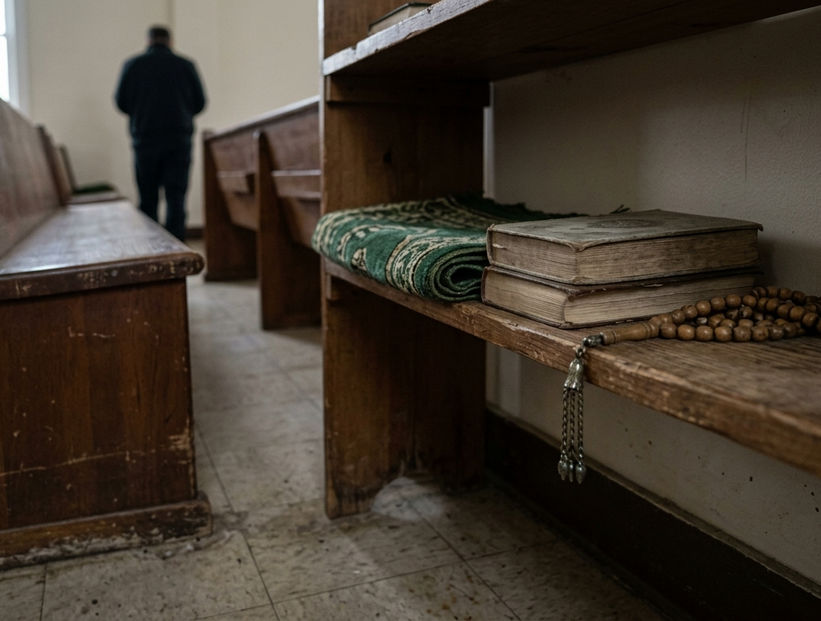
I find it more useful to trace the movement from worship into conduct than to list devotional acts as if they stand alone. Qur’an 33:21 links the excellent example with the one who “remembers Allah much.” Dhikr is the soil in which Prophetic character grows; without it, manners dry out quickly under heat.
A practical pairing for one day
Begin with Fajr on time, then set a clear character intention: guard the tongue until mid-morning. That is small enough to remember and serious enough to expose the self. The prayer has ended, but its discipline is still being tested in the kitchen, the commute, the first message, or the first workplace irritation.
- After Fajr, avoid the first unnecessary complaint.
- Before replying to a difficult message, make brief dhikr and slow the response.
- Let Qur’an recitation shape one decision, not only one feeling.
- Use remembrance to interrupt anger before anger borrows religious language.
What to avoid
Do not treat worship as a private achievement that excuses poor conduct. A long recitation does not make carelessness with promises lighter. Frequent dhikr should make a person easier to trust, not harder to approach.
Justice, Trust, and the Public Face of Faith
Private devotion must become public trust. The Seerah teaches honesty in trade, fulfillment of promises, protection of the vulnerable, consultation, and fairness even toward those outside one’s own circle.
Character where influence exists
Prophetic character becomes especially visible when a Muslim has power over another person’s money, reputation, time, or dignity. Contracts, borrowed money, inheritance conversations, community leadership, public speech, and treatment of converts or newcomers are not side issues. They reveal whether faith has reached the hands.
Power tests different people in different rooms: a parent correcting a child, an employer setting expectations, a teacher grading fairly, an imam handling disagreement, an elder sibling influencing the younger ones, a community leader holding confidential information, or an online voice speaking to people who cannot answer back with equal reach.
Field Note: Detailed legal rulings belong to qualified scholarship and recognized fiqh. For everyday moral formation, however, the ethical direction of the Seerah remains clear: be trustworthy, fair, restrained, and quick to return rights.
Before reconciliation language
Some situations need tenderness first. Family conflict may call for listening and apology before any formal process makes sense. A public trust dispute is different; it may call for documentation, consultation, and returning rights before warm language about unity becomes meaningful.
That distinction protects both mercy and justice. It keeps the believer from using kindness to hide disorder, and from using procedure to avoid repentance.
The Home as the First Classroom of Seerah
Muslim character is first tested at home, where manners are least performative and most revealing. Public religious language can be polished. Family conduct is harder to decorate.
Manners when no audience is watching
The Prophetic model of gentleness, service, patience, and emotional attentiveness corrects the habit of treating religious knowledge as a public performance. Spouses notice whether knowledge has softened speech. Parents notice whether advice comes with warmth. Children notice whether Sunnah is only quoted or also lived. Elders notice whether respect survives inconvenience. Siblings notice whether fairness remains when old rivalries are stirred.
In the ongoing multilingual educational mission associated with Dr. Mohammad Najeeb Qasmi, author and teacher, this community concern is especially relevant: knowledge travels further when it becomes adab in ordinary homes. A lesson on Seerah is not complete when it is understood. It is complete when it changes how a person enters the room.
What to practice at home
- Listen before correcting, especially when the other person expects a lecture.
- Apologize clearly when wrong, without turning the apology into a defense.
- Teach children with warmth, repetition, and visible practice.
- Serve elders without making service sound like a burden.
- Let siblings see fairness in shared money, shared duties, and shared attention.
The home is seasonal in its own way. Some evenings are tired, some mornings are rushed, and some conversations arrive at the worst possible time. Those are not interruptions to character training. They are the classroom.
Begin Tonight with One Prophetic Habit
Make the next step concrete, devotional, and small enough to do before life becomes loud again.
The one-incident method
- Select one Seerah incident.
- Identify one Prophetic trait in it.
- Practice that trait in one real situation during the next day.
For example, read about the Prophet’s ﷺ patience. Name the trait: restraint in speech. Then choose the next family or workplace irritation as the place to practice it before speaking. Not after the argument. Before the first sentence.
Regular Seerah study does not need to begin with a large plan. One passage, one lesson, one action, repeated consistently, can train attention and soften conduct. The point is not to finish a book quickly, but to let one Prophetic quality enter tomorrow’s behavior.
Before sleeping tonight, write one Prophetic quality to practice tomorrow and the exact situation where it will likely be needed.