In this Article
- How Sacred Geography Took Shape in Early Islam
- Makkah: The Ka'bah, Tawaf, and the Memory of Ibrahim (AS)
- Madinah: Hijrah, Masjid Nabawi, and the First Learning Community
- Shaam and Syria: Prophetic Narrations, Damascus, and Modern Rupture
- Kufa: The Town of Jurists, Traditionists, and Hanafi Formation
- Turkey, the Ottomans, and the Public Legacy of Hanafi Law
- How to Visit Historical Places Without Confusing History and Worship
- A Reader's Route Through the Map
How Sacred Geography Took Shape in Early Islam
In the first generations of Islam, sacred geography took shape through worship, migration, scholarship, governance, and the memory of communities who carried revelation into daily life.
Makkah stands first because of the Ka'bah. Madinah comes into view through the Hijrah and the public formation of the Prophetic community. Shaam carries layers of prophetic narrations, Bait al-Maqdis, later rule, and end-time reports. Kufa matters because knowledge settled there in the speech of teachers, jurists, reciters, and traditionists.
This guide uses four categories as its map: worship, migration, scholarship, and governance. That order helps keep the heart steady. A place may be old and beloved without having a special act of worship attached to it.
Field Note: I find this distinction especially useful for families: ask first what Allah has legislated, then ask what history teaches, then ask how to visit with adab.
The lens here is Sunni, Hanafi, Deobandi, and educational, with Arabic terms explained for English-reading Muslims and families. Where reports differ in specialist detail, this article stays with the commonly taught outlines used in devotional study and avoids turning every historical question into a courtroom.
Makkah: The Ka'bah, Tawaf, and the Memory of Ibrahim (AS)
The House at the center
Makkah is understood through the Ka'bah before it is understood through its streets, mountains, or modern buildings. The Qur'anic memory attached to the city is that Ibrahim (AS) and Ismail (AS) raised the foundations of the House as a center of worship.
That is why Tawaf is not a symbolic walk around a monument. It is worship directed to Allah, performed around the Sacred House according to the guidance of the Shari'ah. The building is honored, but worship belongs to Allah alone.
Markers pilgrims hear about
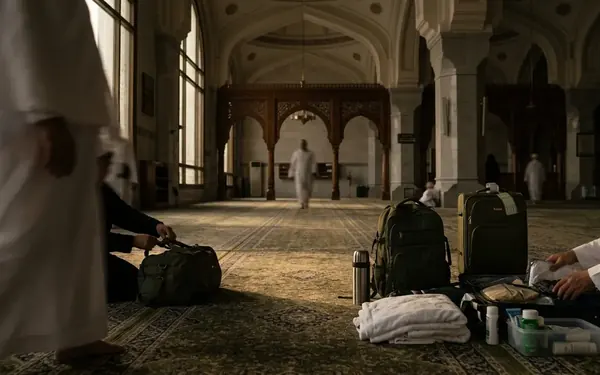
During Hajj or Umrah preparation, several names come up repeatedly: the Hateem, Meezab al-Rahma, Multazam, and Al-Rukn al-Yamani. Each marker has a place in the devotional memory of Makkah, but they do not all carry the same legal ruling for touch, dua, or physical approach.
- Hateem: associated with the original structure of the Ka'bah and treated with special care in discussions of Tawaf.
- Meezab al-Rahma: the water spout of mercy, often noticed above the Hateem area.
- Multazam: the area between the Black Stone and the door of the Ka'bah, remembered as a place of supplication.
- Al-Rukn al-Yamani: the Yemeni Corner, known in the rites of Tawaf.
Two architectural turning points are often mentioned in teaching circles: the reconstruction associated with Abdullah ibn Zubair in 64 AH and the later alteration under Hajjaj ibn Yusuf in 73 AH. These details matter because they remind us that the built form has a history, while the sanctity of the House rests on revelation, not stonework alone.
Important: Affection for sacred sites is expressed through Tawaf, dua, humility, and lawful etiquette. It is not expressed through invented touching, wiping, or object-veneration.
Madinah: Hijrah, Masjid Nabawi, and the First Learning Community
Taiba, Taba, and the Hijrah
Madinah is also known as Taiba and Taba. Its honor is tied to the Hijrah, when the Muslim community moved from pressure and concealment into a public, ordered life under the guidance of Prophet Muhammad (PBUH).
The city teaches a different lesson from Makkah. Makkah gathers the body around the Ka'bah; Madinah gathers the community around prayer, teaching, service, and prophetic companionship.
The mosque as a complete institution
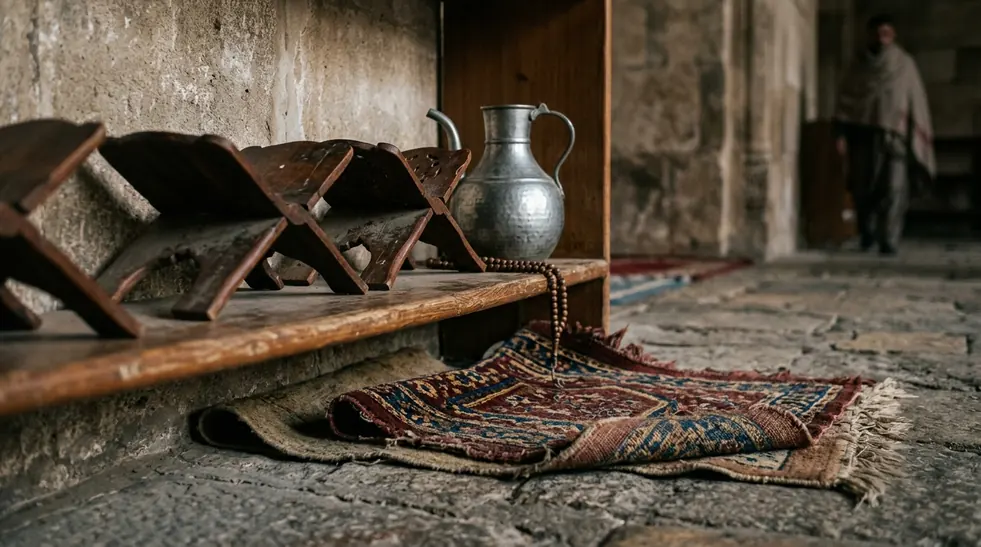
Masjid Quba and Masjid Nabawi belong to the first year after Hijrah, 1 AH, in the narrative of arrival and settlement. Masjid Nabawi was never only a prayer hall. It was a place of salah, governance, learning, reconciliation, hospitality, and social care.
This is why the Ashab al-Suffah matter in the memory of Madinah. They were a formative learning group connected to the mosque environment, and Abu Hurairah (RA), a notable transmitter of Hadith, is associated with that setting. Knowledge here was not decorative. It was lived between hunger, listening, worship, and service.
Visitation with composure
Prophet Muhammad (PBUH) passed away and was buried in Madinah in 11 AH. Abu Bakr Siddique (RA) and Umar Farooq (RA) are buried beside him.
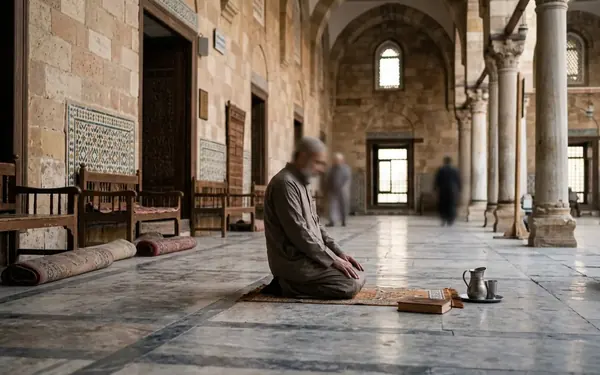
For visitors, devotional etiquette should remain clear: pray Tahiyyatal-Masjid when entering the mosque where appropriate, send Durood upon the Prophet (PBUH), offer dignified salam, and avoid excess around the blessed chamber. Love does not need noise to be sincere.
Bottom Line: Madinah visitation should deepen Durood, prayer, gratitude, and Sunnah-shaped conduct, not become object-focused devotion around pillars, the minbar, or the chamber.
Shaam and Syria: Prophetic Narrations, Damascus, and Modern Rupture
A region larger than a modern state
Shaam in classical Muslim usage is a broader historical region, not simply the modern Syrian Arab Republic. This matters. If we collapse the older religious-geographical meaning into one contemporary border, we misread both the narrations and the history.
Bait al-Maqdis stands within this wider sacred memory. It was the first qiblah and the earthly station connected to Isra and Mi'raj: the night journey from Makkah to Jerusalem and the ascension from Jerusalem to the heavens.
Inherited vocabulary and later reports
Terms such as Amud-ul-Kitab and the association of Shaam with Sam bin Nuh appear in transmitted sacred-historical vocabulary. They should be read as part of inherited Muslim learning, not as modern administrative geography.
Eschatological narrations also connect Shaam with later events: Imam Mahdi moving toward Shaam and Isa (AS) descending by the white minaret in Damascus. These reports are approached with reverence, but they should not be converted into casual travel claims or speculative maps passed around without discipline.
Political layers
The first Islamic army was dispatched toward the Shaam frontier in 11 AH. Damascus later became the Umayyad capital, giving the region a major place in Muslim political history. Much later, after World War I, modern borders in the region were reshaped under British and French power.
So the comparison is useful: Shaam is a sacred-historical region in Muslim memory; modern Syria is one political state within that wider frame. Both deserve careful language.
Kufa: The Town of Jurists, Traditionists, and Hanafi Formation
A city built for settlement and learning
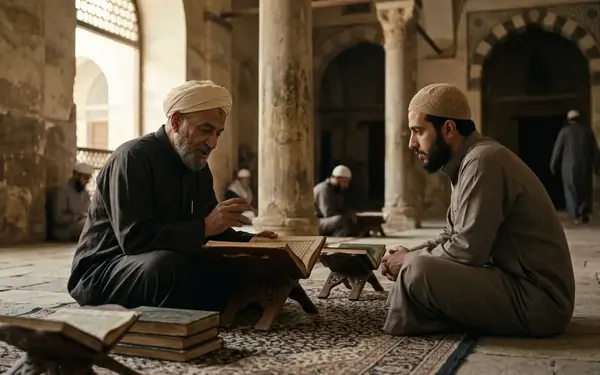
Kufa was founded as a planned Islamic city in 17 AH under Saad bin Abi Waqqas (RA). Its importance lies less in monuments and more in teachers, students, recitation, Hadith transmission, and legal reasoning.
Abdullah bin Mas'ud (RA) was the major Companion-teacher whose instruction shaped Kufan learning. Through him, Kufa became associated with Qur'an study, Hadith learning, and careful legal understanding.
From instruction to legal culture
Kufa produced a scholarly environment where a Faqeeh, a jurist, had to think carefully about texts, practice, analogy, and disagreement. Muhaddiseen preserved and examined reports. Students of Qir'at studied canonical recitation. Prayer-law discussions such as Rafe Yadain were treated as legal questions, not as excuses for mockery.
Imam Abu Hanifa, born in 80 AH, is the most prominent jurist associated with Kufa and a foundational figure for Fiqh-e-Hanafi. His legacy is not only a list of rulings. It is a disciplined way of asking how revealed texts guide changing human situations.
Field Note: Kufa teaches a quiet lesson: a city becomes religiously important when trustworthy learning takes root there, not merely when old walls survive.
Turkey, the Ottomans, and the Public Legacy of Hanafi Law
Do not flatten the timeline
Khilafat-e-Rashida refers to the 30-year period associated with the first four Caliphs after Prophet Muhammad (PBUH). Later Muslim governments should not be treated as identical copies of that period.
That comparison protects us from two mistakes. One mistake romanticizes every later empire as if it were the same as the earliest caliphate. The other dismisses later Muslim public law as though scholarship never entered administration. History is more textured than both reactions.
Expansion, administration, and Hanafi public law
During the era of Umar Farooq (RA), Islamic rule expanded into lands including Iran and Egypt. This early political horizon shaped the questions later scholars and rulers had to answer: courts, taxes, public order, non-Muslim communities, and governance across distance.
Fiqh-e-Hanafi later held official or preferred public status under major Muslim dynasties, especially the Abbasids and the Ottomans. In that setting, juristic learning moved from teaching circles into courts and administration. The Ottoman Empire formally ended in 1923, followed by the Turkish Republic.
Modern references to the AKP or Recep Tayyip Erdogan belong to political context, not proof of religious authority or Hanafi scholarship. Public religion and state power should be read carefully, with attention to time, place, and method.
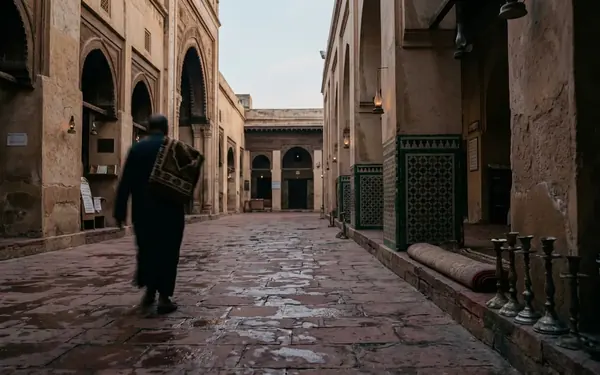
How to Visit Historical Places Without Confusing History and Worship
A four-step discipline
The common failure is simple: treating every old Islamic site as though special worship must be attached to it. A better method is slower and safer.
- Identify the place: name it accurately and avoid exaggerated claims.
- Learn the verified history: ask what happened there and what is actually known.
- Ask what worship is legislated: distinguish prayer, dua, Durood, and salam from unsupported practices.
- List what to avoid: note actions that may lead to Shirk, invented tabarruk claims, or unlawful imitation.
Use the same three questions in Makkah, Madinah, Masajid Khamsa, and other historical sites: What happened here? What worship is legislated here? What should be avoided here?
Family place-notes
For families, short place-notes work better than long lectures. Three to five lines per site are enough: one line for what happened, one etiquette point, and one practice to avoid.
Children remember concrete guidance. Tell them, for example, that photographs are not the main purpose of visitation. Tell them that love for the Prophet (PBUH), the Companions, and sacred places must remain inside Tawhid and Sunnah. Say it gently, but say it clearly.
Important: Sacred history deepens devotion when it leads to prayer, gratitude, correct belief, and responsible learning.
A Reader's Route Through the Map
A useful reading route begins at the center and then moves outward in expanding circles. Start with Makkah for worship and the Ka'bah. Move to Madinah for Hijrah, Prophetic society, Masjid Nabawi, and the first learning community. Then study Shaam for sacred memory and rule, Kufa for scholarship, and Turkey for the later public life of Hanafi law.
This sequence keeps the heart from scattering. Worship comes before political memory. Migration comes before institutions. Scholarship comes before slogans about law and power.
After Asr in Masjid Nabawi, a student-pilgrim sits quietly near the back of a row. He offers Durood with composure, looks toward the area of Suffah, and opens a small notebook on his knee. In careful handwriting he writes one line: sacred places are not souvenirs; they are responsibilities.