Knowledge Preserved as a Trust Before Allah
"Allah will raise those who have believed among you and those who were given knowledge, by degrees." (Qur’an 58:11)
The preservation of Islamic learning is the faithful transmission of revelation, practical legal understanding, worship, manners, and scholarly discipline across generations. It is not merely the storage of information in books or on websites. Sacred knowledge is an amanah, a divine trust meant to be lived.
Darul Uloom Deoband is one historical expression of the Muslim duty to carry this knowledge with humility, accuracy, and service. Beyond its campus, it represents a living framework where scholars and students gather to protect the integrity of the faith. When we look at such institutions, we are witnessing the continuing effort to keep the teachings of the Prophet Muhammad (PBUH) alive in the hearts and actions of the community.
Why a Seminary Became a Vessel for Continuity
Late nineteenth-century North Indian Muslims faced severe political, educational, and social upheaval. The disruption of traditional patronage meant religious instruction required a new, stable vessel. Without dedicated spaces for learning, the community risked losing its connection to classical scholarship.
Darul Uloom Deoband emerged to meet this urgent need for teaching circles and trained scholars. The focus remained tightly bound to continuity in the Qur’an, Hadith, Arabic, and Hanafi jurisprudence. The founders did not seek to invent a new theology. They built a framework to protect what already existed.
The official institutional history traces its establishment to 1283 AH / 1866 CE in Deoband, Uttar Pradesh. This foundation provided a structured environment where the transmission of sacred texts could continue uninterrupted despite external political pressures.
Preservation Through Texts, Method, and Adab
Preservation happens through structured, rigorous study.
Students study Qur’anic recitation and meaning, Hadith reading, Arabic grammar, legal principles, creed, and devotional refinement. A common mistake is viewing preservation as memorization alone. True preservation demands disciplined reading, careful legal reasoning, and spiritual conduct. The Deobandi model emphasizes strict continuity with earlier scholarship while training students to apply inherited knowledge responsibly.
We must understand three foundational terms to grasp this process. Fiqh is practical legal understanding. A sanad is a chain of transmission linking the student back through generations of scholars. Adab encompasses disciplined manners before Allah, teachers, texts, and people.
Bottom Line: Sacred learning survives when text, teacher, method, and character remain connected.
The Teacher–Student Chain as a Living Archive
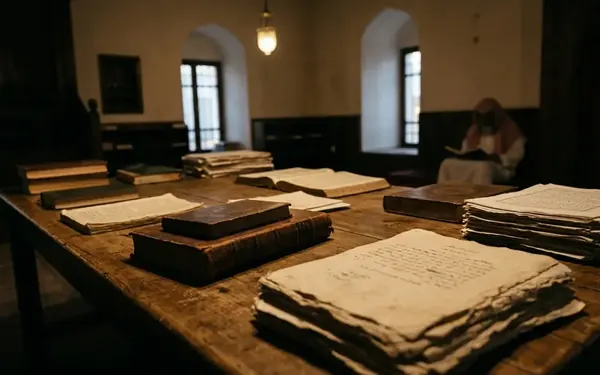
The classroom functions as a living archive—a space where pronunciation, interpretive caution, and legal reasoning are transmitted together.
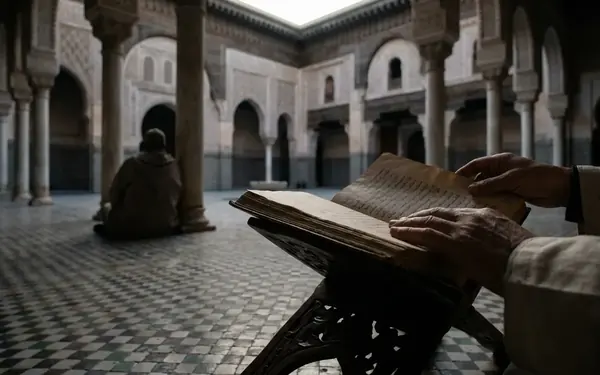
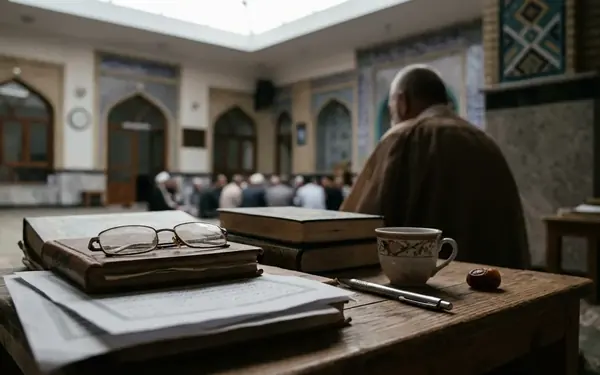
Picture students seated on the floor with a classical text open. They listen to oral explanations, mark the margins of their books, repeat difficult phrases, and receive immediate correction. This physical and intellectual proximity ensures that nuances are not lost in translation or solitary reading.
In this context, an ijazah is not a decorative certificate. It serves as qualitative permission and recognition connected to disciplined study. Deobandi scholarship values strict continuity with earlier Hanafi and Hadith traditions. Specific judgments require qualified teachers who understand how to apply inherited texts to lived reality.
From Seminary Learning to Public Religious Guidance
Knowledge does not stay in the classroom. It reaches ordinary Muslims through sermons, fatwa services, books, Hajj and Umrah instruction, family guidance, and multilingual educational efforts.
The educational platform of Mohammad Najeeb Qasmi continues this service-oriented pattern. It provides accessible rulings for English-reading Muslims, pilgrims, families, and students interested in Sunni Hanafi-Deobandi scholarship. By translating complex legal principles into practical advice, the platform connects classical texts with modern daily life.
While online guidance can clarify principles and common practical rulings, sensitive personal cases are best taken to qualified local scholars who know the person’s exact circumstances.
Field Note: When reading a ruling, note the question, school of law, evidence, and whether the answer fits your exact circumstances.
What Deoband’s Legacy Asks of Today’s Reader
How do you receive knowledge?
Many read quickly and casually, scrolling through rulings without reflection. The legacy of traditional scholarship asks us to read with reverence and responsibility. The devotional sequence is clear: read, verify, ask, practice, and make du‘a for sincerity.
The preservation of Islam is not only a past institutional achievement. It continues whenever a Muslim learns one ruling correctly and acts upon it. Every time you verify a practice before performing it, you participate in this legacy of preservation.
A Prayerful Study Practice for the Coming Week
Choose one reliable lesson on Qur’an, Hadith, fiqh, or Hajj guidance this week. Read it slowly. Write down one practical ruling and one character lesson. Finally, make du‘a that this knowledge becomes beneficial.
O Allah, grant us beneficial knowledge, humility before Your truth, and the ability to serve Your creation.