What Must a Family Have Ready Before Hajj Begins?
What must a family prepare so Hajj is performed with calm, correctness, and mutual care? The answer extends far beyond packing luggage. A household traveling together—spouses, parents, children, elderly relatives, medically vulnerable family members, and first-time pilgrims, faces a unique set of logistical and spiritual demands.
Readiness requires deliberate planning across six practical lanes. These include niyyah, ritual knowledge, official documents, health, family roles, and sabr under pressure. Working through these areas early helps prevent minor inconveniences from escalating into major disruptions.
Confirm the Essentials: Passports, Permits, Tickets, and Money
Families often discover administrative errors in a predictable sequence. Passport and permit issues surface first, followed by health documentation gaps, ticket or accommodation mismatches, and finally, currency shortages. Structuring your checks in this order isolates problems early.
The Verification Timeline
Begin passport and permit checks about 90 to 120 days before travel if bookings remain unfinalized. Repeat this verification roughly 21 to 30 days before departure. Run a final check during the last 48 hours.
A common failure case occurs when a family reaches the airport with packed bags and matching ihram garments, but one adult’s permit is inaccessible offline and the only digital copy sits on a depleted phone. Keep one master folder containing passports, permits, tickets, hotel addresses, transport confirmations, emergency contacts, and health documents. Each adult must carry a separate copy set in a different bag.
Store digital copies offline. Verify current rules through the official Saudi Hajj platform. Set a written daily spending ceiling before departure. Name who pays for meals, taxis, SIM cards, wheelchair support, laundry, and emergency medicine purchases.
Learn the Rites Before the Crowd Teaches Them to You
Many groups assume the appointed guide will manage every ritual detail. Family readiness requires every adult to understand the rites independently. Schedule four family study sessions across about 7 to 14 days prior to departure.
Dedicate one session to the Hajj sequence, one to ihram and its restrictions, one to common mistakes, and one to the practical issues facing women, elders, and children.
Mastering the Sequence
Each adult should be able to explain the basic order of ihram, talbiyah, tawaf, sa‘i, Mina, Arafat, Muzdalifah, ramy, sacrifice arrangements, shaving or trimming, and tawaf al-ifadah without reading from a book. Prepare one pocket sequence card for the family lead. List the rites in order, leaving a separate line for complex questions.
Important: A checklist prevents avoidable confusion, but it cannot replace a proper fiqh manual or a direct ruling from a reliable scholar when menstruation, illness, missed rites, or penalties are involved.
Maintain a Sunni Hanafi-Deobandi orientation for foundational learning. Direct detailed juristic questions to the group’s appointed religious guide.
Assign Family Roles Before You Enter Ihram
Unassigned duties rapidly become arguments once the family is tired. Assign a primary and backup person for documents, medicines, money, children, elderly support, luggage, navigation, and communication with the Hajj group. Two layers of responsibility ensure no task depends on one person during fatigue or separation.
Before entering ihram, every adult must possess the hotel card, one written emergency contact, the group contact, and the agreed meeting point written on physical paper. Relying solely on mobile devices is a serious vulnerability in dense crowds.
Do not use moving people or temporary stalls as meeting points. Choose fixed landmarks such as a hotel lobby desk, tent entrance marker, or transport bay sign. Establish short crowd commands agreed upon in advance: “stop,” “wait,” “water,” “phone,” “toilet,” and “meeting point.” Children and elders must understand these cues before the family reaches a crowded rite.
Pack for Worship, Heat, Walking, and Waiting
Avoid building an oversized inventory. Group items by function: worship, heat, walking, hygiene, medicine, and mobility. Check medication supplies around 30 to 45 days before departure. This is critical for diabetes, blood pressure, heart disease, asthma, blood thinners, and post-surgery care.
Carry prescriptions in their original packaging. Keep a short medical note for chronic conditions detailing the patient’s name, diagnosis, regular medicines, allergies, and emergency contact.
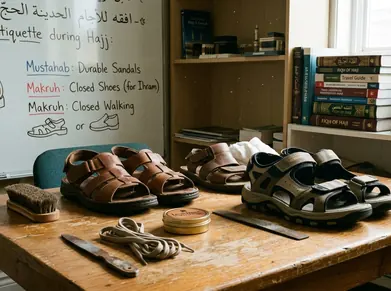
Field Note: New footwear frequently turns tawaf, sa‘i, and long transfers into a preventable injury problem. Test sandals or walking shoes for close to 5 to 7 days before travel using 20 to 40-minute walks.
Pack unscented soap, wipes, and deodorant alternatives separately for ihram use. Label medicine pouches by person rather than placing all tablets into one shared bag.
Plan Separately for Children, Elders, and Vulnerable Relatives
Families traveling with children need identification, bathroom, snack, and rest planning that a group of healthy adults may not require in the same detail. Plan parallel allowances. The rites remain the same, but rest needs and physical capacities differ.
Protecting the Vulnerable
Children should have an identification band or card with the child’s name, guardian’s phone number, hotel name, and group contact. Never rely on a child to remember this under stress.
For elders, set medicine reminders after arrival according to local time. Identify exactly who will carry water, who will manage seating, and who will arrange wheelchair help if needed. An elderly diabetic relative having medication in checked luggage while the family assumes the group schedule will provide predictable meals is a severe planning failure.
Women should prepare questions on menstruation, privacy, clothing, medication timing, and tawaf-related rulings before travel. Do not wait until a rite is already due. This approach reflects Dr. Mohammad Najeeb Qasmi’s educational style: keeping guidance practical for ordinary Muslims while directing individual rulings to qualified scholars who understand the person’s specific circumstances.
Bottom Line: A single family itinerary does not mean a single family pace.
Build a Daily Rhythm for the Days of Hajj
The days of Hajj require a manageable rhythm built around small, repeated checks rather than long speeches delivered when everyone is already exhausted. Based on participant logs, use a 6 to 10-minute morning huddle before leaving the hotel or tent area. Confirm the next rite, identify who needs help, and check required documents, medicine status, water, phone charge, footwear, and the meeting point.
Conduct an 8 to 12-minute evening huddle to decide what can be delayed, what must be done next, who is over-tired, and whether any fiqh question needs to be taken to the guide. Before leaving any resting place, run a strict 60 to 90-second check: documents, water, medicines, phone, footwear, child or elder count, and next destination.
Keep shopping, extra visits, long calls, and excessive photo-taking away from the most demanding Hajj days. Obligatory and necessary actions must not be crowded out by optional activity.
Use the Final 48 Hours as a Family Rehearsal
Do not let the final days dissolve into chaotic packing. Conduct a strict household drill to test whether the family’s plan survives the ordinary pressures of departure. During the final 48 hours, lay out passports, permits, tickets, hotel details, transport confirmations, health papers, cash, cards, and emergency contacts on one table before packing them.
Between 48 and 36 hours before departure, pack and weigh bags. Check the airline allowance against the ticket, test power banks and chargers, and confirm that every adult knows where the master folder is kept.
Between 24 and 12 hours before departure, repeat the Hajj sequence aloud. Review ihram restrictions, check medicines, inspect footwear, and ask each person what they will do if separated.
If departure were tomorrow, which single weakness in the family’s Hajj plan would cause the most confusion?