Entering the Flow of the Kaaba
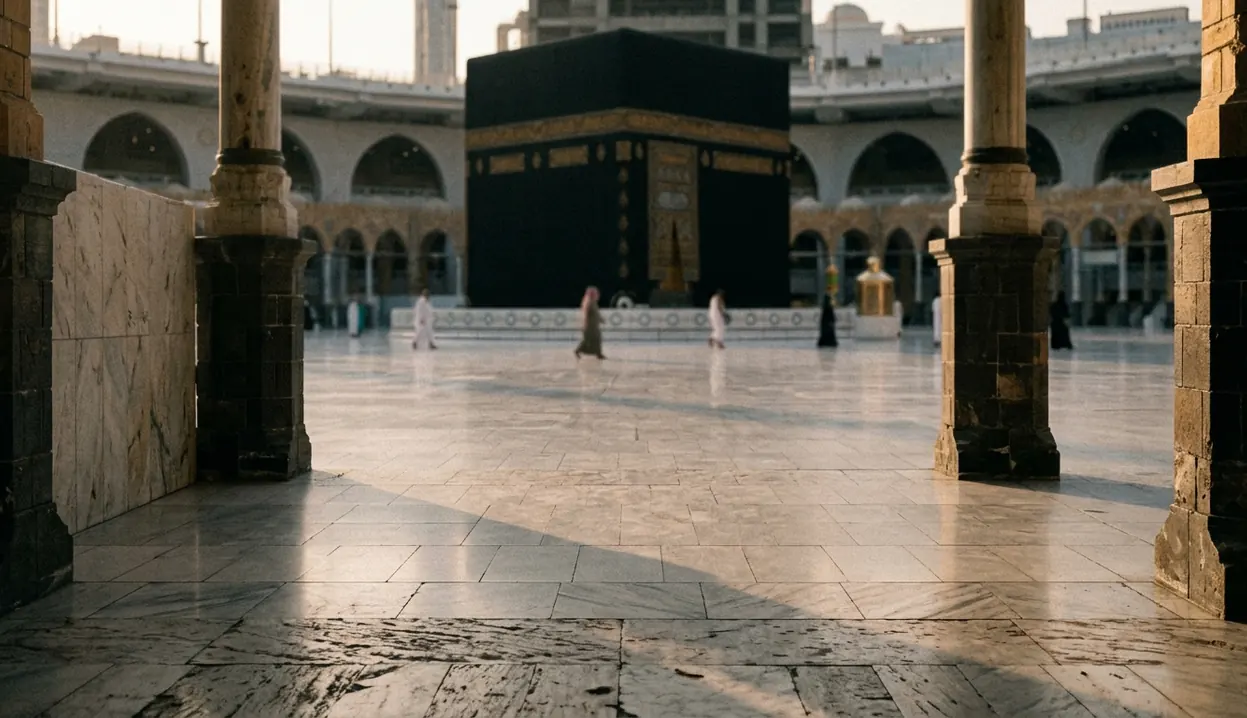
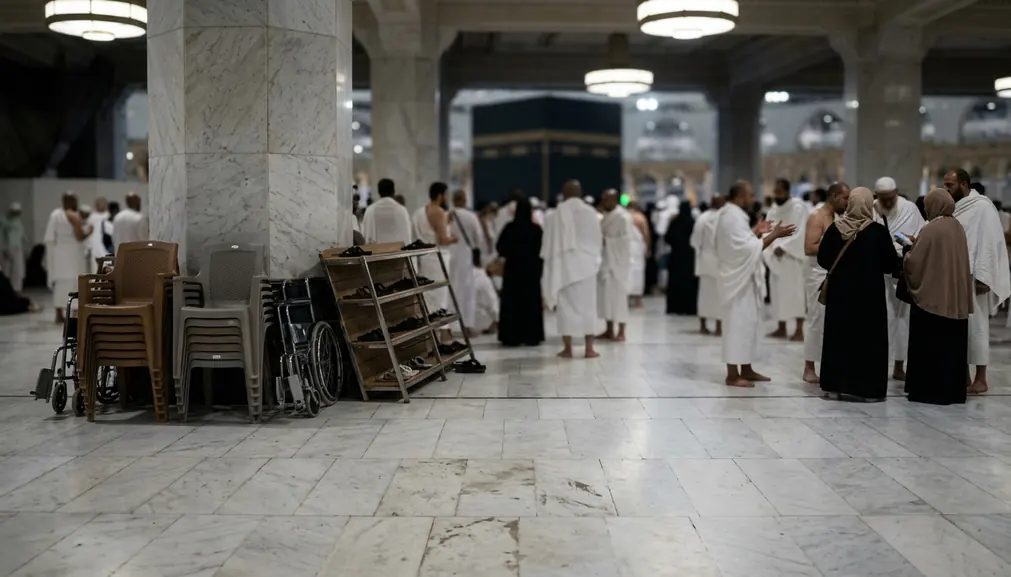
Standing at the edge of the circulating crowd requires a deliberate transition from the open spaces of the sanctuary into the dense, continuous movement of the Mataf. The pilgrim checks their alignment with the Black Stone, ensures the Kaaba remains positioned on their left, and steps forward into the stream. Immediately, a tension arises between the mechanical necessity of counting circuits correctly and the inward demand to comprehend the profound act of worship underway. The physical momentum of thousands of people moving in unison can easily override the individual's capacity for reverence, remembrance, and supplication.
Tawaf consists of seven complete circuits, beginning and ending at this precise alignment. Merging into an available space in the existing flow demands physical awareness and courtesy. Pilgrims should join the movement smoothly rather than stopping abruptly in a circulation lane to arrange a footwear bag, open a supplication booklet, or locate separated companions. An unhurried Tawaf concerns attention and restraint, not manufacturing a conspicuously slow gait that disrupts the surrounding believers. Cultivating a deliberate presence allows the pilgrim to absorb the reality of their location and their absolute dependence on Allah.
The Cost of Rushing the Seven Circuits
Focusing heavily on rapid completion often reduces the rites to a mere task-counting exercise. Pilgrims frequently find their attention pulled toward keeping up with a group marker, checking a recording device, or anticipating the next stage of the journey. These are recognizable interruptions to presence of heart. When the mind is occupied with logistics rather than worship, the seven circuits pass in a blur of physical exertion devoid of spiritual engagement.
Recovering this lost focus relies on practical adjustments rather than demanding constant emotional intensity. When distraction occurs, the most effective response is simply to identify the current circuit and return to understood dhikr or supplication. The Tawaf remains entirely valid even if the mind wanders. Surah al-Hajj 22:29 directs pilgrims to perform Tawaf around al-Bayt al-Atiq, the Ancient House, placing the act firmly within the fulfillment of pilgrimage rites. Grounding the reflection in this Qur'anic presentation emphasizes that calm awareness supports remembrance. A reduced speed that blocks or unsettles other pilgrims defeats the intended courtesy of the sanctuary, while a rushed pace sacrifices the opportunity for intimate conversation with the Creator.
Balancing Inner Stillness with Ritual Requirements
Pace during Tawaf is frequently governed by external factors such as crowd density, organized movement, and physical ability. The unchanging ritual structure takes precedence over any fixed recommendation to walk slowly. Inward attentiveness must accompany the prescribed physical actions rather than displace them.
In the Hanafi treatment of a Tawaf in which ramal is prescribed, a man performs a brisk, close-stepped gait during the first three circuits and walks normally during the remaining four. Deliberate presence should anchor this practice. The physical exertion of ramal serves as an act of devotion, and the pilgrim maintains their focus on Allah while fulfilling this specific sunnah of the Prophet Muhammad (PBUH). Safety instructions remain operational rather than symbolic throughout the ritual. Pilgrims must never reverse direction, stop abruptly in a moving lane, cut across wheelchair movement, or force a route to the Black Stone.
Jurisprudential Boundaries for Tawaf This spiritual framework addresses focus and pacing, leaving questions involving an incomplete circuit, loss of wudu, menstruation, severe physical limitation, interruption for congregational prayer, or uncertainty about the relevant type of Tawaf to reliable Hanafi guidance based on the pilgrim's actual circumstances.
Structuring Focus Across the Circuits
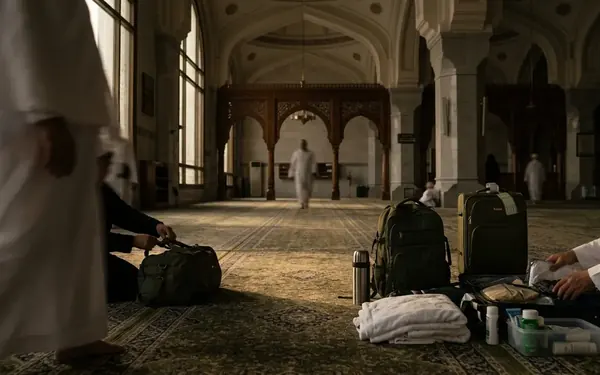
Building a method around the ritual's existing seven-part structure adds no new formulas or burdensome requirements. Before entering the flow, the pilgrim confirms the starting alignment, secures essential belongings, silences avoidable digital notifications, and forms a clear intention. This brief preparation clears the mental workspace for worship.
Each circuit can receive one broad concern to anchor the mind. A usable sequence includes gratitude, repentance, guidance, family, the wider Muslim community, personal need, and acceptance of Hajj or Umrah. These seven themes serve strictly as concentration prompts. They are optional aids rather than assigned supplications. Pilgrims may use Qur'anic du'as, transmitted prayers, personal supplication, tasbih, tahlil, salawat, or quiet reflection. One short supplication whose meaning is understood proves far more effective as an attention aid than several pages recited so quickly that the pilgrim cannot follow their meaning.
Every return to the Black Stone alignment becomes a cue to renew attention safely. When distracted, the pilgrim resumes from the circuit currently being performed rather than restarting the theme or repeating words merely to complete a self-imposed list. Guidance from Mohammad Najeeb Qasmi emphasizes that the quality of presence outweighs the sheer volume of recited words.
Preparing the Heart Before the Mataf
The most critical decisions for an attentive Tawaf happen in the minutes before joining the crowd. Companions can agree on one primary meeting point, one fallback point, and a waiting window of about 10–15 minutes before moving to the fallback. These locations should be identifiable without standing at an entrance or within the Tawaf flow. Settling these logistics ensures that anxiety about separation does not dictate a rushed pace.
If crowd pressure determines the walking speed for part of a circuit, the immediate practice can be reduced to a familiar phrase of dhikr until there is enough space for longer supplication. The objective is the safest unhurried rhythm available, except where an applicable rite calls for a particular gait. Finishing in the shortest possible time offers no measure of an attentive Tawaf.
Pause outside the moving path before beginning. Identify one sincere need to bring before Allah, secure all identity items, and enter the circulation without adopting a target completion time. Establish your intention, step into the flow, and let the rhythm of the seven circuits anchor your remembrance.